


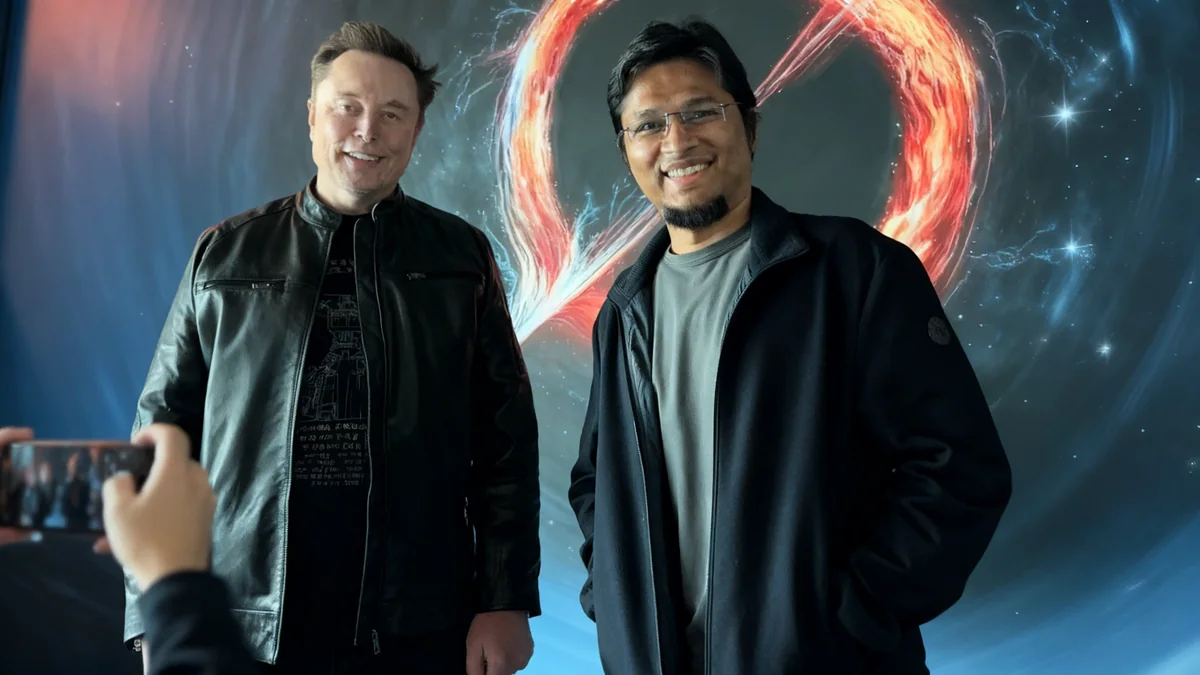


Anthropic has appointed Rahul Patil, the former Chief Technology Officer at Stripe, as its new CTO. Patil takes over the role from company co-founder Sam McCandlish, who will transition to a newly created position as Chief Architect. This leadership change signals a strategic focus on scaling the company's technical infrastructure to meet growing enterprise demand.
The appointment comes as Anthropic faces intense competition in the artificial intelligence sector, with rivals like OpenAI and Meta investing billions into their computing capabilities. Patil's hiring is part of a broader technical restructuring at the AI safety and research company.
Key Takeaways
- Rahul Patil, formerly of Stripe and Oracle, is the new Chief Technical Officer at Anthropic.
- Co-founder Sam McCandlish moves to the role of Chief Architect, focusing on large-scale model training.
- The move includes a technical reorganization to better integrate product engineering with infrastructure teams.
- This change happens as Anthropic's Claude products place significant strain on its existing infrastructure.
Strategic Leadership Reshuffle
Anthropic has implemented significant changes in its technical leadership. Rahul Patil officially began his role as CTO this week, assuming responsibility for the company's compute, infrastructure, and inference operations. His duties will also cover a range of other engineering functions critical to the company's product development and stability.
In his new capacity as Chief Architect, Sam McCandlish will dedicate his efforts to pre-training and the complex process of large-scale model training. This allows him to continue and expand upon his foundational work with Anthropic's core AI models. Both Patil and McCandlish will report directly to Anthropic President Daniela Amodei, ensuring a cohesive technical strategy.
Reorganizing for Growth
The leadership update is accompanied by an internal restructuring of Anthropic's core technical group. The company is merging its product-engineering team with its infrastructure and inference teams. This change aims to create a more streamlined development process, allowing for tighter collaboration between the teams that build products and those that manage the underlying hardware and systems.
Why This Restructuring Matters
Integrating product and infrastructure teams is a common strategy for technology companies experiencing rapid growth. It helps ensure that new features are designed with an awareness of system capabilities and limitations, leading to more stable and scalable products. For Anthropic, this is crucial as it pushes its Claude AI models into more demanding enterprise environments.
Navigating an Arms Race in AI Infrastructure
Anthropic's strategic shift occurs within a highly competitive landscape. Major AI labs at Meta and OpenAI are engaged in an infrastructure spending spree, investing vast sums to secure the computing power necessary for developing next-generation AI models.
Competitor Spending
- Meta: Mark Zuckerberg has stated plans to spend $600 billion on U.S. infrastructure by the end of 2028.
- OpenAI: The company has contracted for a similar scale of investment through partnerships with Microsoft, Oracle, and the ambitious Stargate supercomputer project.
While the exact figures for Anthropic's infrastructure budget are not public, the company is under immense pressure. It must optimize its growing computational resources for both performance and energy efficiency to keep pace with its larger, better-funded competitors.
Managing Demand for Claude
The popularity of Anthropic's own products, particularly the Claude family of AI models, has already tested the limits of its infrastructure. The company has had to actively manage user demand to maintain service stability.
In July, Anthropic introduced new usage rate limits for its Claude Code service. The company cited the need to manage power users who were running the application continuously. These limits restrict users to a certain number of hours per week on its Sonnet and Opus models, with the exact amount fluctuating based on overall system strain.
Patil's Decades of Infrastructure Expertise
Rahul Patil brings over two decades of engineering and infrastructure management experience to Anthropic. His career includes leadership roles at some of the world's largest technology companies, making him uniquely suited to address Anthropic's scaling challenges.
A Proven Track Record
Patil's professional background includes:
- Stripe: Five years in senior technical roles, culminating as CTO.
- Oracle: Served as a Senior Vice President for cloud infrastructure.
- Amazon: Held a significant engineering role.
- Microsoft: Began his career with an engineering position.
In a statement announcing the hire, Anthropic President Daniela Amodei highlighted Patil's background in building systems for corporate clients.
"Rahul brings a proven track record in building and scaling the kind of dependable infrastructure that businesses need. I couldn’t be more excited about what this means for strengthening Claude’s position as the leading intelligence platform for enterprises."
Patil expressed his own enthusiasm for joining the AI company, emphasizing its research and focus on safety.
"I’m thrilled to join Anthropic at this pivotal moment in AI development. This feels like the most important work I could be doing right now — I personally can’t think of a greater calling and responsibility."
With Patil's appointment, Anthropic is positioning itself to build a more robust and scalable foundation, aiming to solidify its place as a key provider of AI technology for the enterprise market.