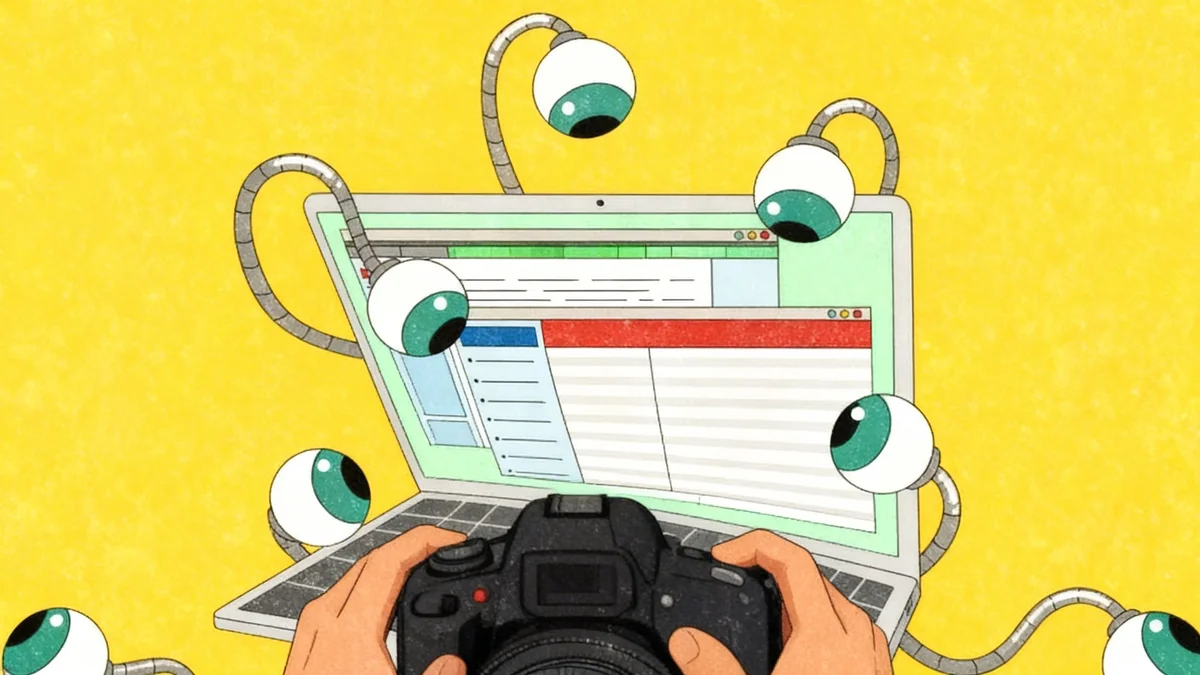



While many professionals are focused on the future possibility of artificial intelligence replacing jobs, a more immediate technological shift is already reshaping the work environment. A growing category of sophisticated surveillance tools, often called 'bossware,' is allowing employers to monitor employee activity with unprecedented detail, raising new questions about privacy and trust in the workplace.
These technologies go far beyond traditional time-tracking, employing AI to analyze productivity, track keystrokes, and even predict employee behavior. This quiet proliferation of advanced monitoring is transforming how work is managed and evaluated, often without the full understanding of the employees being watched.
Key Takeaways
- 'Bossware' refers to a range of digital tools used by employers to surveil, monitor, and manage employees' activities on their computers and devices.
- The use of artificial intelligence has made these tools more powerful, enabling granular tracking and predictive analysis of worker behavior.
- The term gained prominence following a 2020 report by the Electronic Frontier Foundation, highlighting growing concerns over digital privacy at work.
- Experts argue this trend represents a significant evolution from historical workplace supervision, creating new challenges for employee morale and autonomy.
What Exactly Is 'Bossware'?
The term 'bossware' describes software designed to give managers a detailed view of their employees' digital activities. This is not a single product but a broad category of technologies that can perform a variety of monitoring functions. The goal for employers is often to increase efficiency, ensure security, and manage remote teams more effectively.
Common features of these surveillance platforms include:
- Keystroke logging: Recording every key pressed by an employee.
- Screen monitoring: Taking periodic screenshots or live video of a user's screen.
- Activity tracking: Measuring mouse movements, clicks, and the amount of time spent in different applications.
- Web and app usage: Generating reports on which websites employees visit and which software they use.
- GPS tracking: Monitoring the location of employees using company-issued mobile devices or vehicles.
The term itself was popularized in a 2020 report from the Electronic Frontier Foundation, a nonprofit focused on digital privacy. The report highlighted the rapid adoption of such tools, particularly as remote work became more common, and raised alarms about their intrusive nature.
The Evolution of Workplace Monitoring
Supervising employees is as old as the concept of work itself. For centuries, managers have sought ways to ensure tasks were completed efficiently and on time. However, the introduction of artificial intelligence has fundamentally changed the scale and scope of this supervision.
From Supervision to Surveillance
Historically, workplace monitoring was direct and observable—a manager walking the factory floor or an open-plan office. Digital tools initially replicated this with simple time clocks and project management software. Modern bossware represents a shift toward continuous, often invisible, data collection that analyzes behavior rather than just output.
According to Karen Levy, a professor at Cornell and author of “Data Driven: Truckers, Technology, and the New Workplace Surveillance,” the practice has been a constant in labor management. “Workplace surveillance has been going on since we’ve had work,” she noted. The difference today lies in the technology's capability.
“The rise of A.I.,” Levy explained, has allowed employers to monitor workers in “more predictive or granular ways.”
This means that instead of just confirming an employee is logged in, modern systems can generate a 'productivity score' based on keyboard activity, analyze communication patterns for sentiment, or flag behavior that deviates from an established norm. This move from passive observation to active, predictive analysis marks a significant turning point in employee management.
The Impact on Employees and Workplace Culture
While employers may implement bossware with the intention of boosting productivity, the effects on workers and the overall company culture can be substantial. The feeling of being constantly watched can lead to increased stress, anxiety, and a phenomenon known as 'productivity theater,' where employees focus on appearing busy rather than performing meaningful work.
The Psychological Toll
Constant monitoring can erode trust between employees and management. When workers feel they are not trusted to do their jobs without surveillance, it can lead to decreased job satisfaction, lower morale, and a higher rate of burnout. This can ultimately harm the very productivity the software was meant to improve.
Furthermore, an over-reliance on quantitative data can be misleading. An employee who appears less active on their keyboard might be engaged in deep, strategic thinking, while another might generate high activity metrics through trivial tasks. AI-driven systems may struggle to differentiate between the two, potentially leading to unfair performance evaluations.
Privacy is another major concern. Many surveillance tools do not distinguish between work-related and personal activity, especially in remote settings where the line between professional and private life is blurred. Keystroke loggers could capture personal passwords, and screen monitoring could record private messages or sensitive health information, creating significant personal and legal risks.
The Future of Work and Autonomy
The debate over bossware touches on fundamental questions about the future of work. As technology continues to advance, the tension between employer oversight and employee autonomy is likely to grow. Companies argue that monitoring is necessary to manage performance, protect sensitive data, and ensure compliance in a distributed workforce.
However, critics and employee advocates argue for a greater emphasis on trust, clear expectations, and performance metrics based on results rather than activity. They contend that a healthy work environment is built on mutual respect, not constant surveillance.
As these technologies become more integrated into daily operations, conversations about their ethical implementation are becoming more urgent. The challenge for modern organizations is to find a balance—leveraging technology to improve operations without degrading the human element of work and turning the workplace into an environment of digital oversight.