



Nvidia's Chief Executive, Jensen Huang, has expressed continued uncertainty regarding the company's ability to resume sales of its most advanced artificial intelligence chips to China. His comments came on Friday in South Korea, following a high-stakes summit between U.S. President Trump and Chinese leader Xi Jinping that left the future of semiconductor trade ambiguous.
The summit, held on Thursday, was closely watched by the global tech industry for signs of a potential thaw in U.S. trade restrictions. However, remarks from President Trump after the meeting have created more questions than answers for the Silicon Valley chip giant, which is caught in the middle of the economic rivalry between the two nations.
Key Takeaways
- Nvidia CEO Jensen Huang remains unsure if the company can resume advanced AI chip sales to China.
- Comments follow a meeting between President Trump and Xi Jinping in South Korea on October 31, 2025.
- President Trump's post-summit remarks caused confusion, suggesting Chinese officials would talk to Nvidia directly.
- The situation highlights the ongoing tension between U.S. national security policy and corporate economic interests in the crucial Chinese market.
Unclear Signals From Diplomatic Talks
Speaking to reporters in Gyeongju, South Korea, on Friday, Jensen Huang conveyed that the path forward for Nvidia in China remains murky. His appearance at the Asia-Pacific Economic Cooperation meeting came just a day after the conclusion of the Trump-Xi summit, which was expected to address the stringent U.S. export controls on high-end technology.
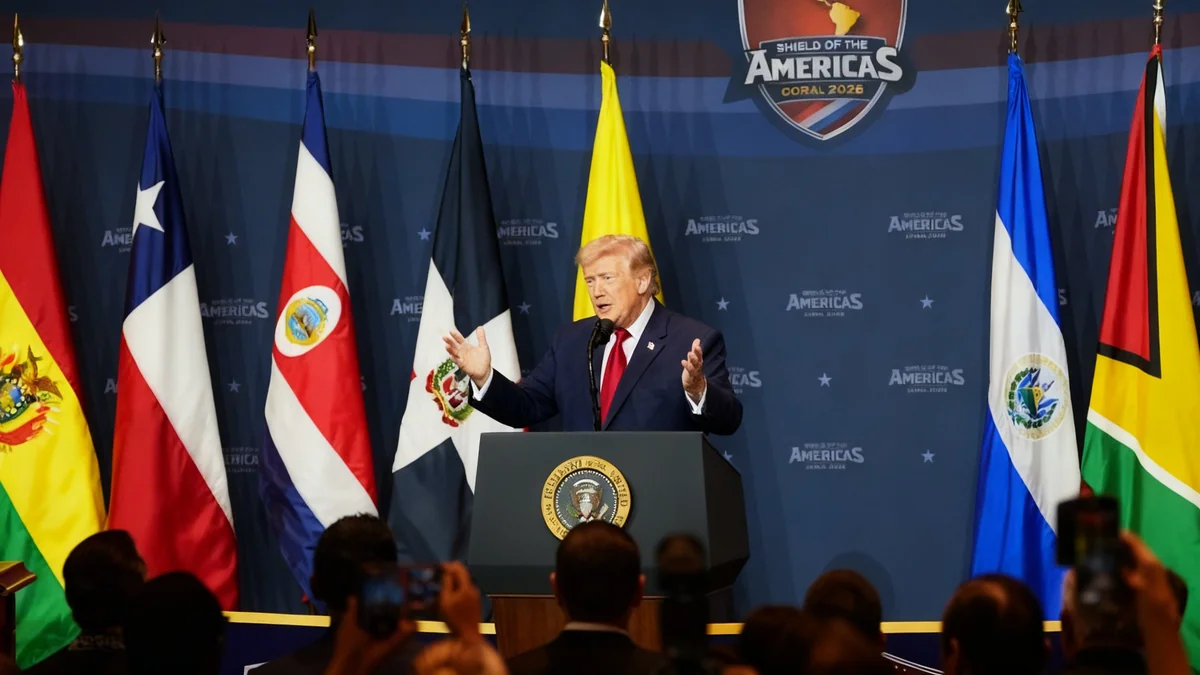
President Trump told the press that the topic of semiconductors was discussed with Mr. Xi. However, he did not specifically mention Nvidia’s most powerful AI processors. Instead, he stated that Chinese officials would engage directly with Nvidia about “taking chips,” with the United States acting as a “referee.”
This statement has been a source of confusion for industry analysts. Prior to the summit, there was speculation that the Trump administration might consider easing the restrictions that currently prevent Nvidia from selling its top-tier AI technology to Chinese companies. The President's comments did not provide the clarity many had hoped for, leaving Nvidia in a state of limbo.
Background: The U.S. Chip Export Controls
For several years, the U.S. government has implemented a series of export controls aimed at restricting China's access to advanced semiconductor technology. The primary justification for these measures is national security, with officials expressing concern that China could use high-performance AI chips to modernize its military and enhance its surveillance capabilities. These regulations have specifically targeted companies like Nvidia, which designs the world's most powerful graphics processing units (GPUs) essential for training AI models.
Nvidia's High-Stakes Balancing Act
The situation places Nvidia in a difficult position. China represents a significant market for the company, accounting for a substantial portion of its revenue before the most severe restrictions were put in place. The skyrocketing global demand for AI systems has made Nvidia one of the world's most valuable companies, but being cut off from a major market poses a long-term risk.
Mr. Huang has consistently expressed a desire to continue serving customers in China while remaining fully compliant with U.S. law. The company has previously developed modified, lower-performance versions of its advanced chips specifically for the Chinese market to adhere to export rules. However, the U.S. government has progressively tightened these regulations, making it increasingly difficult for Nvidia to operate in the region.
"We are eager to resume selling our advanced semiconductors in China," Mr. Huang reiterated on Friday, echoing previous statements about the importance of the market while acknowledging the complexities of the geopolitical landscape.
The economic stakes are immense. For Nvidia, losing access to China means a significant loss of potential revenue. For Chinese technology companies, being denied Nvidia's state-of-the-art chips hinders their ability to compete at the forefront of AI development, from large language models to autonomous driving.
The AI Chip Market
Nvidia currently dominates the market for AI accelerator chips, with an estimated market share exceeding 80%. Its GPUs have become the industry standard for training and running complex artificial intelligence models, making them a critical component in the global technology race.
Geopolitical Tensions and Corporate Strategy
The uncertainty following the Trump-Xi meeting underscores the broader challenges multinational corporations face amid escalating geopolitical competition. Corporate strategies are now heavily influenced by national security policies and trade disputes, forcing companies to navigate a complex web of regulations that can change with little notice.
President Trump's suggestion that the U.S. would act as a “referee” while Nvidia negotiates with China is an unconventional approach to international trade policy. Typically, corporations must adhere to clear regulations set by the government. This new framing introduces an element of ambiguity, leaving it unclear what role the U.S. government intends to play or what outcomes it would deem acceptable.
What Comes Next?
For now, the industry is in a wait-and-see mode. Key questions remain unanswered:
- Will the U.S. Commerce Department issue new guidance or licenses for technology exports to China?
- What specific terms will Chinese officials and Nvidia be expected to negotiate?
- How will the U.S. government define its role as a “referee” in these potential talks?
Jensen Huang's cautious remarks reflect the reality on the ground: until there is a formal change in U.S. policy, Nvidia's hands are tied. The company must continue to navigate the existing restrictions, which prohibit the sale of its most advanced AI technology to Chinese entities. The outcome of any future discussions between the company and Chinese officials will ultimately depend on the political will of Washington and Beijing to find a middle ground.
As the world's leading AI chipmaker, Nvidia's fortunes are inextricably linked to the geopolitical climate. The events of the past week demonstrate that even a face-to-face meeting between the leaders of the world's two largest economies may not be enough to resolve the deep-seated tensions at the heart of the global tech rivalry.