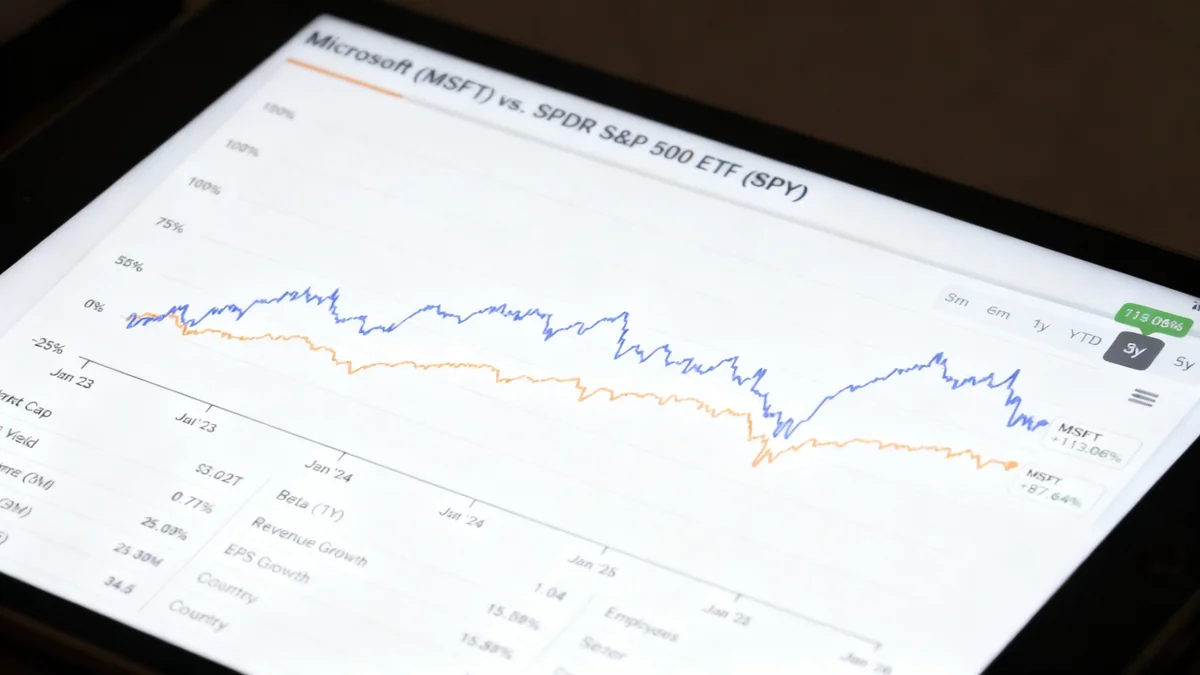





Microsoft is positioning itself for a significant growth phase driven by artificial intelligence, with recent financial reports and long-term contracts indicating a major shift from experimental AI use to full-scale enterprise deployment. The company's cloud and productivity segments are showing robust growth, fueled by the integration of AI across its entire product ecosystem.
As businesses move beyond pilot programs, Microsoft's established presence in corporate workflows through Azure, Microsoft 365, and its suite of developer tools provides a distinct advantage. This positions the company to capture a substantial share of the next wave of AI-driven market expansion, with analysts pointing to 2026 as a pivotal year.
Key Takeaways
- Microsoft's Intelligent Cloud revenue grew 28% to $30.9 billion in the first quarter of fiscal 2026.
- Future revenue commitments, or Remaining Performance Obligation (RPO), have surpassed $400 billion, a 50% increase year-over-year.
- Analysts project AI-related services could add approximately $26 billion to Microsoft's revenue by fiscal 2026.
- Wall Street maintains a consensus "Strong Buy" rating, with an average price target suggesting nearly 30% potential upside.
Financial Momentum Signals AI Integration Success
Microsoft's latest financial results provide clear evidence of its growing dominance in the AI sector. For the first quarter of fiscal 2026, the company reported total revenues of $77.7 billion, an 18% increase compared to the same period last year. This performance surpasses general market trends and highlights the success of its AI-centric strategy.
The Intelligent Cloud division, which includes the critical Azure platform, was a standout performer. It generated $30.9 billion in revenue, marking a 28% year-over-year increase. Within this segment, Azure and other cloud services expanded by an impressive 40%, reinforcing its role as the company's primary growth engine.
Even mature segments are showing renewed vigor. The Productivity and Business Processes division, home to Microsoft 365 and Office, grew by 17% to reach $33 billion. This growth is largely attributed to the successful integration of AI tools like Copilot, which are driving upgrades and increasing user engagement across the enterprise.
By the Numbers: Q1 Fiscal 2026
- Total Revenue: $77.7 Billion (+18% YoY)
- Intelligent Cloud Revenue: $30.9 Billion (+28% YoY)
- Azure Growth: Approximately 40%
- Productivity Revenue: $33 Billion (+17% YoY)
The Shift from Experimentation to Full Deployment
The technology industry is at a crossroads with artificial intelligence. While the initial excitement was driven by experimentation and pilot projects, the market is now entering a more mature phase. Companies are moving from asking if they should use AI to deciding how to deploy it at scale across their operations.
Microsoft is uniquely positioned to capitalize on this transition. Unlike standalone AI products, Microsoft's strategy involves weaving AI into the fabric of its existing ecosystem. This includes operating systems like Windows, productivity suites like Microsoft 365, developer platforms like GitHub, and its comprehensive security stack.
For many businesses, adopting Microsoft's AI tools is not a matter of choosing a new vendor but of activating new features within the software they already use daily. This deeply integrated approach reduces friction and makes Azure the default infrastructure choice for many existing customers looking to scale their AI workloads.
The "Picks and Shovels" Strategy
Microsoft is often described as a "picks and shovels" provider in the AI revolution. This analogy, drawn from the gold rush era, suggests that the most consistent profits were made not by the prospectors but by those selling the essential tools. In this case, Microsoft provides the fundamental cloud infrastructure (Azure), data management tools, and software platforms that other companies need to build and run their own AI applications.
Long-Term Commitments and Market Confidence
One of the strongest indicators of Microsoft's future performance is its Remaining Performance Obligation (RPO). This metric represents contracted future revenue that has not yet been recognized. Microsoft's commercial RPO has swelled to nearly $400 billion, a year-over-year increase of more than 50%.
This massive backlog demonstrates that enterprise customers are signing long-term, multi-year deals, locking in their commitment to Microsoft's cloud and AI platforms. It provides exceptional visibility into future revenue streams and signals strong confidence in the company's direction, despite broader economic uncertainties or concerns about a potential AI bubble.
This level of long-term commitment from enterprise clients suggests a fundamental belief in the durability and necessity of Microsoft's platform for the next decade of technological advancement.
Analysts on Wall Street have taken note. The consensus rating for Microsoft stock is a "Strong Buy." According to data from TipRanks, the average analyst price target for 2026 is $631.36, which represents a potential upside of nearly 30% from its current trading levels. While the company's stock trades at a premium valuation with a price-to-earnings ratio in the mid-30s, many experts argue it is justified by the company's durable growth prospects and unmatched position in enterprise AI.
Looking Ahead to 2026 and Beyond
As the AI market matures, the competitive landscape will increasingly favor companies that can offer a complete, integrated solution. Microsoft's ability to provide everything from the underlying cloud infrastructure to the end-user applications gives it a powerful competitive advantage.
It is estimated that within the next three years, approximately 75% of Microsoft's enterprise customer base will be using AI-enabled functionality in some capacity. This level of adoption is expected to fundamentally reshape the company's growth profile and profit margins.
While competition from Amazon Web Services and Google Cloud remains intense, Microsoft's deep integration into existing business workflows creates a sticky ecosystem that is difficult to replicate. As 2026 approaches, the company appears to be entering a defining phase where its long-term AI investments begin to deliver substantial and sustained financial returns.