

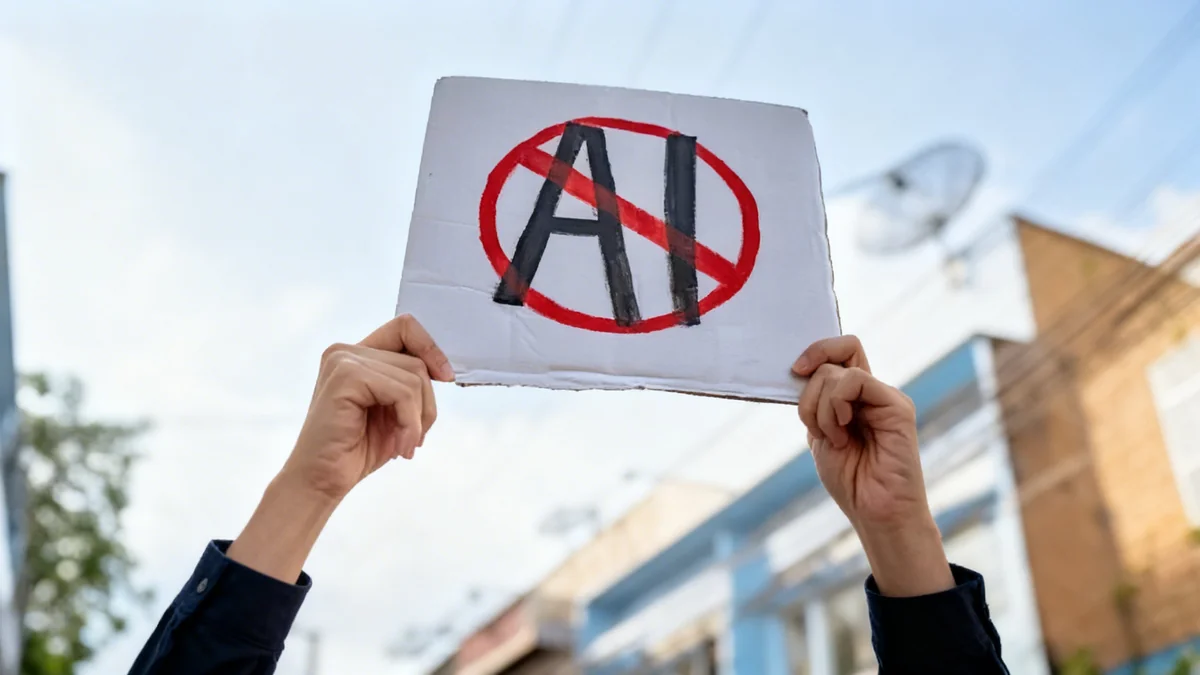


A video that appeared to show a television interview with a woman discussing food stamp fraud recently went viral on TikTok. The clip sparked hundreds of angry and racist comments, but the woman, the reporter, and the entire conversation were completely fabricated by artificial intelligence. The incident highlights a growing and disruptive trend: the rapid spread of AI-generated videos designed to look real, which are now flooding social media platforms and deceiving millions of users.
The proliferation of these realistic fakes, created with new and accessible AI tools, is raising significant concerns about the future of online information. Experts warn that as the technology improves, the ability for the average person to distinguish between reality and AI-generated content is diminishing, creating a fertile ground for disinformation to spread unchecked.
Key Takeaways
- AI-generated videos are becoming increasingly common and realistic, making it difficult for users to identify them as fake.
- A recent viral TikTok video depicting a fake interview about food stamp fraud illustrates how these videos can provoke strong, real-world emotional reactions.
- Tools like OpenAI's Sora have made it possible to create convincing fake videos from simple text prompts, accelerating the spread of this content.
- Social media platforms are struggling to effectively label or remove AI-generated fakes, often relying on user reporting or easily missed labels.
Anatomy of a Digital Deception
In October, a video circulated widely on TikTok featuring what looked like a news report. In it, a woman was interviewed and appeared to confess to illegally selling food stamps for cash. The video was presented as a genuine news segment, triggering a wave of outrage in the comments section.
Users reacted as if the event were real. Comments vilified the woman, with many calling for her arrest. Some used the video to attack government assistance programs, while others posted explicitly racist remarks. One user commented, "Yep fraud! This is what is happening! Cut the food stamps!" Another wrote, "She just confessed! Hopefully she is arrested soon!" These reactions demonstrated the video's power to manipulate public opinion on sensitive political and social issues.
Subtle Clues, Widespread Deception
Despite the strong reactions, several clues indicated the video was not real. A watermark for an AI tool briefly appeared before being blurred out, and the uploader included a small "#AI" hashtag in the description. TikTok later added its own label, but these signs were easily overlooked by viewers scrolling through their feeds.
The incident is not isolated. Similar AI-generated content is appearing across all major platforms, including Facebook, X (formerly Twitter), Instagram, and YouTube. Another fake video circulating on Facebook showed a fabricated news report of a woman being arrested, also created with AI tools. That video appeared with no labels, deceiving hundreds of commenters who believed it was authentic footage.
The Technology Fueling the Fakes
The recent surge in deceptive videos is powered by rapid advancements in generative AI. Tools developed by companies like OpenAI can now produce high-quality, realistic video clips from simple text descriptions. The release of models like Sora has placed powerful video generation capabilities into the hands of the public.
This accessibility means that anyone with an internet connection can create a plausible, alternate reality. The technology can generate people, environments, and actions that never occurred, making it a powerful tool for those looking to spread disinformation, create propaganda, or simply generate viral content for engagement.
"We are entering a new era of disinformation. Before, you needed sophisticated software and skills to create a convincing deepfake. Now, you just need to type a sentence. The barrier to entry has all but disappeared."
This technological shift presents an enormous challenge. While platforms have policies against deceptive content, the sheer volume and increasing quality of AI-generated media make moderation difficult. The systems in place often rely on uploaders to voluntarily flag their content as AI-generated or on automated systems that can be easily fooled.
The Societal Impact of a Post-Truth Internet
The widespread presence of AI fakes erodes trust in the information people consume online. When any video could potentially be a fabrication, it becomes harder to believe anything, including legitimate news and documentation of real events. This phenomenon, known as the "liar's dividend," allows bad actors to dismiss genuine evidence of wrongdoing as a deepfake.
The consequences extend beyond simple confusion. As seen with the food stamp video, these fakes can be used to:
- Inflame social divisions: Content can be targeted to exploit existing prejudices around race, class, and politics.
- Manipulate political discourse: Fabricated clips of politicians or activists could sway public opinion during elections.
- Harm reputations: Individuals can be placed in compromising or false situations through AI-generated videos.
- Promote scams: Fake celebrity endorsements and false news reports are already being used to deceive people into financial schemes.
A New Challenge for Digital Literacy
The rise of AI-generated content requires a fundamental shift in how people approach online media. Traditional methods of verifying information, such as looking for reputable sources, are no longer sufficient when the source material itself can be convincingly fabricated. Experts are now calling for a greater emphasis on digital literacy education that teaches critical viewing skills, including spotting subtle AI artifacts and questioning the source and intent behind any piece of viral content.
The Uphill Battle for Platforms and Policymakers
Social media companies find themselves on the front lines of this new information war. They face pressure to act decisively, but the challenge is complex. Overly aggressive moderation risks censoring legitimate content, including satire or artistic uses of AI. However, a hands-off approach allows harmful disinformation to flourish.
Current labeling systems are often inconsistent and ineffective. A small hashtag or a label buried beneath the video description is not enough to alert a casual viewer that what they are seeing is fake. As AI tools become more integrated into content creation apps, the line between an edited video and a fully generated one will continue to blur.
The situation has attracted the attention of regulators, but legislative solutions are slow to develop and face their own set of challenges regarding free speech and implementation. In the meantime, the responsibility largely falls on the individual user to navigate an increasingly deceptive digital world.
As the technology that creates these alternate realities continues to evolve, the ability of society to agree on a shared set of facts is at risk. The fake interview about food stamps was not just a viral video; it was a clear demonstration of a future where seeing is no longer believing.