
In her first communication since taking the helm, new Microsoft Gaming CEO Asha Sharma has outlined a vision for the future of Xbox, placing a renewed emphasis on console hardware. In an internal email sent to employees on February 20, 2026, Sharma, who replaces the outgoing Phil Spencer, committed to the brand's origins while also addressing the role of artificial intelligence in game development.
Sharma's appointment comes at a critical time for the Xbox brand, as questions have circulated regarding its long-term hardware strategy. Her message appears designed to directly address these concerns, promising a direction that both honors the platform's legacy and adapts to the modern gaming landscape.
Key Takeaways
- Asha Sharma has been named the new CEO of Microsoft Gaming, succeeding Phil Spencer.
- In an internal memo, Sharma announced a "renewed commitment to Xbox starting with console."
- She took a firm stance against using generative AI for game creation, promising not to "flood our ecosystem with soulless AI slop."
- The company will continue its multi-platform strategy across PC, mobile, and cloud.
- Future game development will focus on "taking risks" and empowering player creativity.
A Renewed Commitment to Hardware
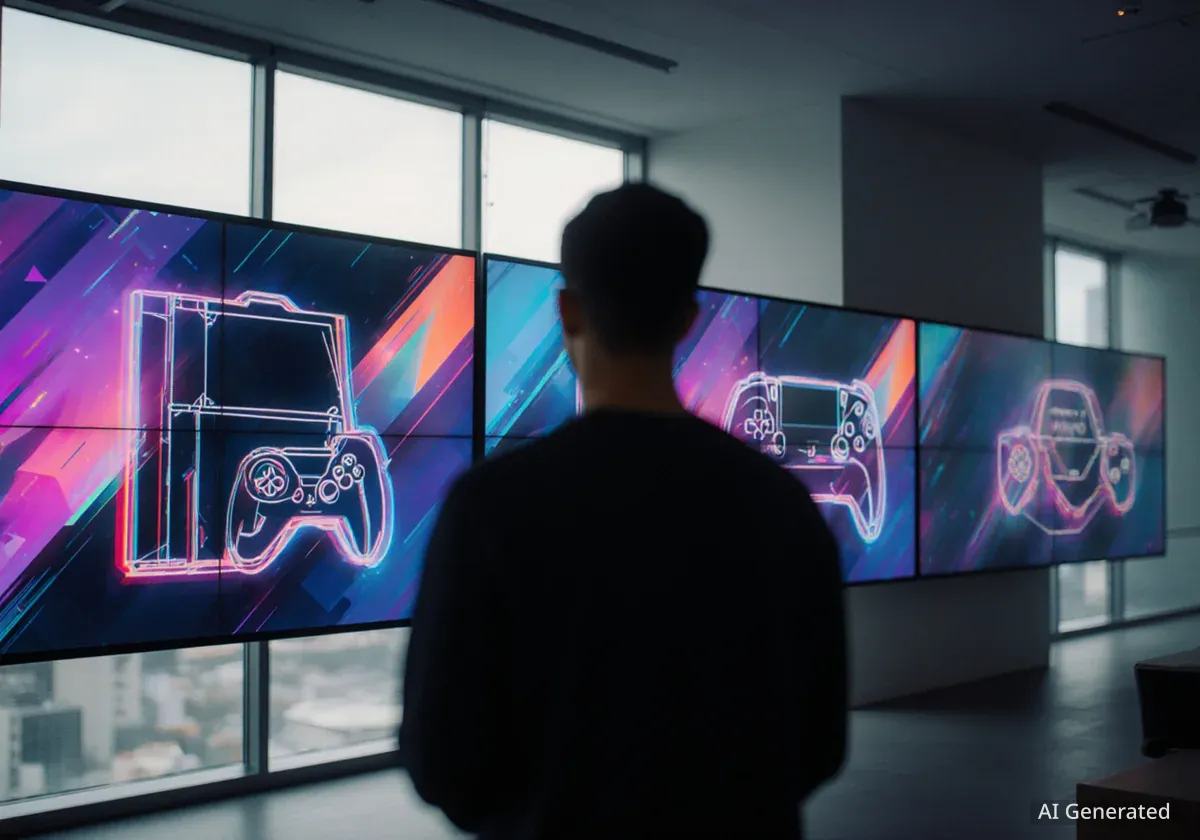
One of the most significant points in Sharma's communication was the explicit promise to double down on dedicated gaming hardware. This move aims to reassure a core fanbase that has been central to the brand's identity for over two decades.
"We will celebrate our roots with a renewed commitment to Xbox starting with console which has shaped who we are," Sharma wrote in the email. She described this as the beginning of "the return of Xbox," signaling a clear intention to remain a major competitor in the console market.
This declaration provides a clear, albeit early, roadmap for the next generation of Xbox. It suggests that despite industry shifts towards cloud and subscription services, Microsoft sees a vibrant future for a dedicated device at the center of the living room.
A Strategic Shift
Sharma's message arrives as the gaming industry grapples with the future of hardware. With the rise of cloud gaming and powerful PCs, some analysts have questioned the long-term viability of traditional consoles. This announcement positions Microsoft as a firm believer in the console model for the foreseeable future.
Balancing Act: Consoles in a Multi-Platform World
While recommitting to hardware, Sharma clarified that this does not mean a retreat from the company's broader ambitions. The strategy to make Xbox games and services available on multiple devices remains a key priority.
"Gaming now lives across devices, not within the limits of any single piece of hardware," she stated. The goal is to create a seamless experience for players, whether they are on a console, PC, mobile phone, or using a cloud streaming service.
She emphasized the need to "break down barriers so developers can build once and reach players everywhere without compromise." This dual approach—a strong console core with a wide multi-device reach—appears to be the foundation of her strategy.
The Xbox Ecosystem: Microsoft's gaming strategy has increasingly focused on its Game Pass subscription service, which offers a library of games across console, PC, and cloud platforms. Sharma's plan integrates a strong hardware future into this existing ecosystem.
A Firm Stance on Artificial Intelligence
Perhaps the most striking part of Sharma's memo was her direct and forceful position on the use of generative AI in game creation. At a time when many tech companies are exploring AI to streamline development, she drew a clear line in the sand.
"We will not chase short-term efficiency or flood our ecosystem with soulless AI slop. Games are and always will be art, crafted by humans, and created with the most innovative technology provided by us."
This statement is particularly noteworthy as it appears to diverge from the more open stance on AI-generated content held by Microsoft CEO Satya Nadella. Sharma's pledge to prioritize human craftsmanship is a powerful message to both developers and players who may be wary of AI's role in creative fields.
By positioning technology as a tool to support human artists rather than replace them, the new Microsoft Gaming CEO is setting a distinct tone for her leadership.
Future of Content and Innovation
Beyond hardware and technology, Sharma also touched on the future of Xbox's game library. Working alongside the newly promoted Xbox chief content officer, Matt Booty, the plan is to foster creativity and explore new territory.
Sharma promised that the company would support games that "take risks" and would "enter new categories and markets where we can add real value."
She also spoke of evolving the company's approach to its established intellectual properties (IP). "We will not treat those worlds as static IP to milk and monetize," she wrote. Instead, the focus will be on building a "shared platform and tools that empower developers and players to create and share their own stories."
This suggests a move towards more dynamic, community-driven experiences, potentially leveraging existing worlds like Halo or Minecraft as platforms for user-generated content.
Facing a competitive market, Sharma's initial communication outlines a clear direction: strengthen the core console business, maintain multi-platform flexibility, champion human creativity in game development, and innovate with content. While the path ahead presents challenges, the vision for the next chapter of Xbox has been firmly established.