

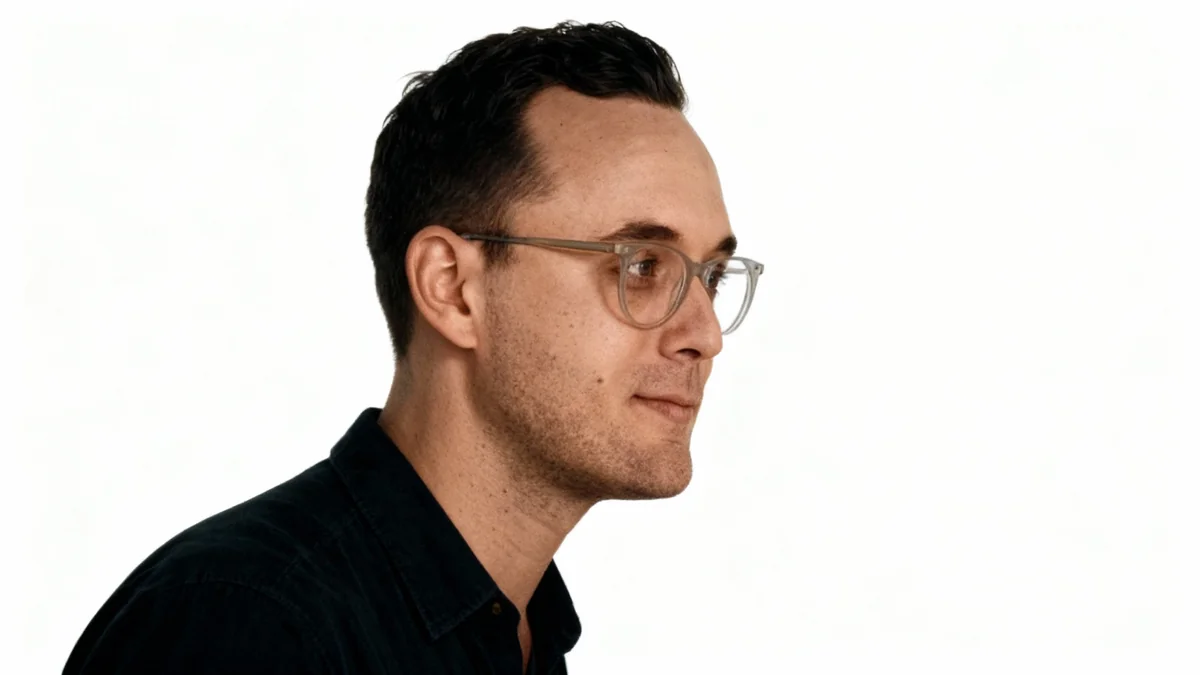
A 15-year-old who recently earned a doctorate in quantum physics has embarked on a second PhD program, this time in medical science and artificial intelligence. Laurent Simons, who completed his first doctoral degree at the University of Antwerp, has now shifted his focus to a far more ambitious and controversial goal: engineering human enhancement.
Simons has relocated to Munich to begin his new research, which he states is aimed at creating what he calls “superhumans.” This move places the young academic at the intersection of advanced computation, biology, and the emerging field of longevity science.
Key Takeaways
- Laurent Simons, age 15, has earned a PhD in theoretical physics from the University of Antwerp.
- He has immediately enrolled in a second PhD program in Munich, focusing on medical science and artificial intelligence.
- Simons has publicly stated his long-term goal is to “create superhumans” and overcome the challenges of aging.
- His academic transition from quantum mechanics to applied biomedical science is highly unusual.
An Accelerated Academic Journey
Laurent Simons's path through the academic world has been anything but conventional. He completed his secondary school education by the age of eight, setting the stage for a rapid ascent through higher education. He earned both his bachelor’s and master’s degrees in physics from the University of Antwerp in a combined period of less than two years.
His doctoral research in theoretical physics culminated in late 2025. His dissertation, titled Bose polarons in superfluids and supersolids, explored the complex behavior of particles in Bose-Einstein condensates—a state of matter that occurs at temperatures near absolute zero. This highly specialized area of condensed matter physics has applications in fields like quantum computing and the study of many-body interactions.
Timeline of Achievement
- Age 8: Completed secondary school.
- Age 13-14: Earned bachelor's and master's degrees in physics.
- Age 15: Awarded a PhD in theoretical physics.
Simons's work was conducted through standard academic channels, including an internship at the prestigious Max Planck Institute for Quantum Optics. The University of Antwerp confirmed that he fulfilled all requirements for his doctorate, which included a formal thesis defense.
A New Frontier: From Physics to Biology
Immediately after defending his physics dissertation, Simons made a significant pivot. He moved to Munich to begin a new doctoral program in medical science, with a specific focus on the applications of artificial intelligence. This transition from the abstract world of quantum mechanics to the applied field of biomedicine is exceptionally rare, particularly at the doctoral level.
The specific details of his current research remain private, but his stated intentions are clear. In a recent television interview, Simons elaborated on his ultimate objective.
“After this, I’ll start working towards my goal: creating superhumans.”
This is not a new ambition for him. Reports indicate that since the age of 11, Simons has been interested in the scientific challenge of defeating aging. His current work appears to be focused on developing computational frameworks using AI for applications like regenerative medicine, predictive diagnostics, and modeling the human lifespan.
What is Human Enhancement?
The term “human enhancement” refers to the use of technology to improve human capabilities beyond what is considered normal. This can range from therapeutic interventions that restore function to more speculative concepts like cognitive augmentation, radical life extension, and genetic modification. The field is a subject of intense ethical and scientific debate.
At present, there is no indication that his research involves direct clinical experimentation or human subjects. Instead, his work seems to be centered on the theoretical and computational foundations that could one day underpin such advancements.
The Broader Context of Longevity Science
Simons's ambitions align with a rapidly growing sector of scientific research and private investment dedicated to extending human healthspan and lifespan. Major companies, including Altos Labs and Calico Life Sciences, are investing billions of dollars into understanding and potentially reversing the biological processes of aging.
This field, often called longevity science, leverages breakthroughs in several disciplines:
- Cellular Reprogramming: Techniques to revert adult cells to a more youthful state.
- Genomics: The study of gene expression and its role in age-related diseases.
- Artificial Intelligence: Using machine learning to analyze massive biological datasets, predict disease, and identify potential therapeutic targets.
Academic research in this area is also expanding, with journals like Nature Aging regularly publishing findings on how technology can be used to improve health outcomes in later life. While many of these approaches are still in the early stages of development, the convergence of AI and biology is seen by many as a promising frontier.
Ethical Questions and Academic Oversight
The goal of creating “superhumans” raises significant ethical questions. The concept itself is not formally defined in science and touches on complex debates about what it means to be human. Discussions in bioethics often distinguish between therapy (curing disease) and enhancement (exceeding normal capabilities), with the latter being a source of considerable controversy.
For academic institutions, the case of a teenage researcher pursuing such goals presents unique challenges. Questions of supervision, peer review, and cross-disciplinary oversight become more complex when dealing with a minor, regardless of their intellectual capabilities.
Currently, there is no evidence to suggest that Simons's work has crossed any established ethical lines. His academic credentials in physics are verified, and his new program is within a recognized institution. However, his journey will be closely watched by both the scientific community and ethicists as he navigates a field where the boundaries of what is possible—and what is permissible—are constantly being redefined.