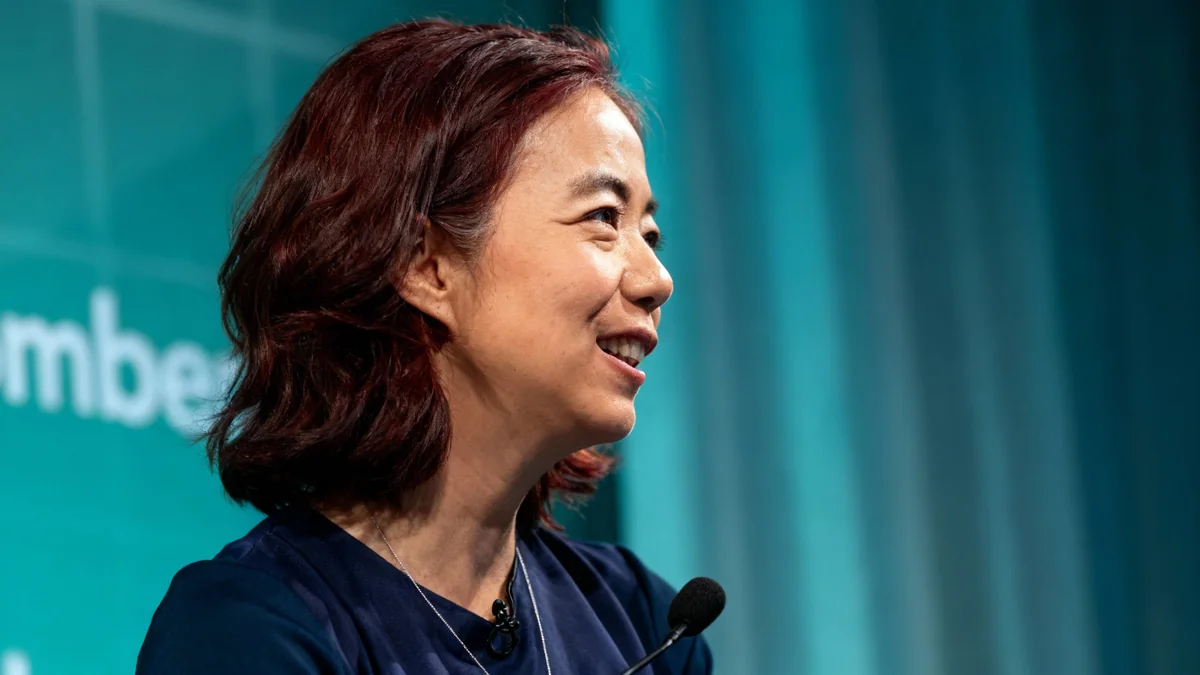


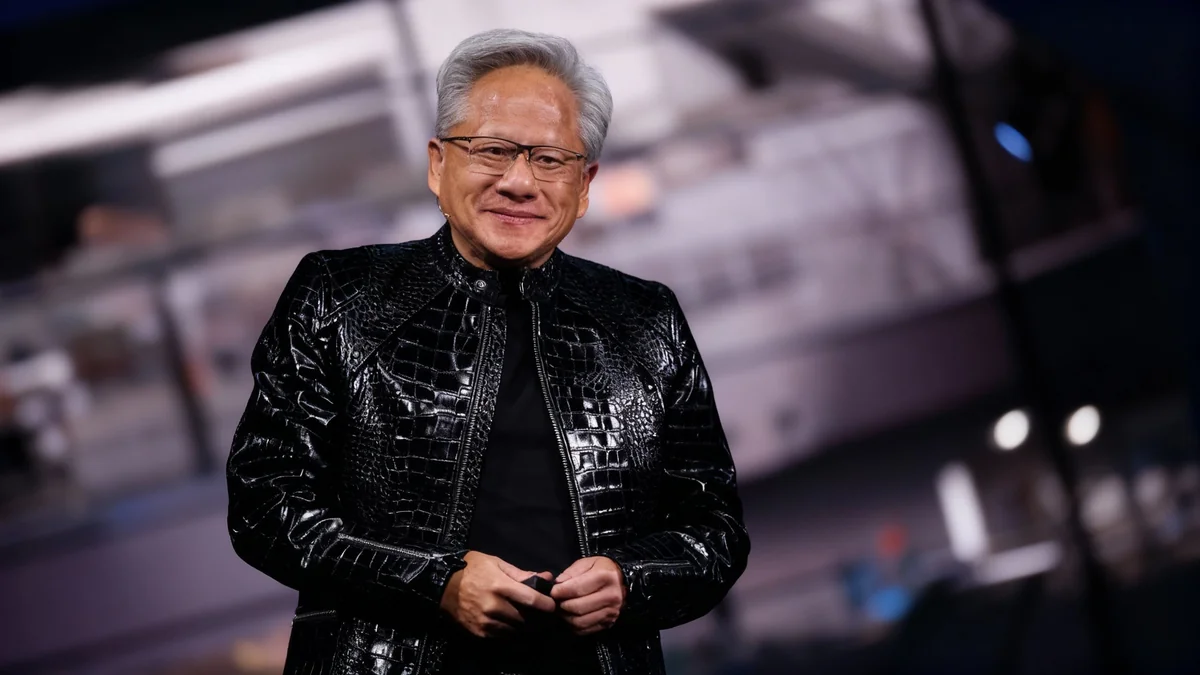
Professor Fei-Fei Li, a leading figure in the development of artificial intelligence, has been awarded the prestigious 2025 Queen Elizabeth Prize for Engineering. She is one of seven pioneers recognized for their foundational contributions to modern machine learning.
The award ceremony, held at St James's Palace, marked the first time all seven laureates have gathered in person. The King presented the prize, which honors groundbreaking innovations that have a global benefit to humanity.
Key Takeaways
- Professor Fei-Fei Li is one of seven recipients of the 2025 Queen Elizabeth Prize for Engineering.
- She is recognized for her pioneering work on ImageNet, a dataset that transformed computer vision.
- As the sole woman in the group, Li stated she is "proud to be different" and now accepts the 'godmother of AI' title to inspire future generations.
- Li advocates for a pragmatic, science-based approach to discussions about AI's risks and potential.
Seven Pioneers Recognized for AI Advancements
The Queen Elizabeth Prize for Engineering this year honors a group of individuals whose work has been instrumental in the rapid advancement of AI. Professor Li is joined by six other laureates who have shaped the field.
The distinguished group includes Professor Yoshua Bengio, Dr. Bill Dally, Dr. Geoffrey Hinton, Professor John Hopfield, Nvidia founder Jensen Huang, and Meta's chief AI scientist, Dr. Yann LeCun. Together, their research underpins the machine learning technologies that power today's most sophisticated AI systems.
Lord Vallance, who chairs the prize foundation, described the winners as representing "the very best of engineering." He highlighted that their collective work demonstrates how engineering can both sustain the planet and transform daily life.
The 'Godmother of AI' and Her Legacy
Professor Li, the only woman among the seven honorees, has often been referred to as the 'godmother of AI'. She shared that she has come to embrace the title, despite initial hesitation.
"I would not call myself godmother of anything," she said, but acknowledged the importance of representation. "If I rejected this, it would miss an opportunity for women scientists and technologists to be recognised this way."
She noted that male pioneers are often quickly labeled as 'godfathers' or 'founding fathers'. Accepting the moniker, she feels, serves a greater purpose for the young women she works with and for future generations of girls entering science and technology.
The Impact of ImageNet
Professor Li's primary contribution, for which she is being recognized, is her work on ImageNet. The project involved creating a massive, meticulously organized dataset of images designed to teach computers how to 'see' and recognize objects.
The ImageNet project was a turning point for computer vision, a subfield of AI. By providing a vast and reliable dataset for training, it enabled significant breakthroughs in how machines interpret visual information.
This work effectively "opened the floodgate of data-driven AI," as she described it. The principles established by ImageNet paved the way for many of the visual recognition capabilities found in modern technology, from autonomous vehicles to medical imaging analysis.
A Pragmatic Voice in the AI Debate
The gathering of the laureates brings together individuals with differing views on the future of artificial intelligence. Dr. Hinton has famously warned of AI posing an "extinction-level threat," while Dr. LeCun has argued such apocalyptic warnings are overstated.
Professor Li positions herself with a more measured perspective, describing her view as a "pragmatic approach." She believes the scientific community is accustomed to disagreement and considers it a healthy part of the process.
The AI Safety Spectrum
The debate over AI's long-term risks is a central topic within the tech community. Perspectives range from fears of uncontrollable superintelligence to views that AI is simply a powerful tool that requires responsible development and regulation. The differing opinions among the prize winners reflect this broader industry-wide conversation.
"A topic as profound and impactful as AI requires a lot of healthy debate and public discourse," she explained. However, she expressed concern over extreme rhetoric on both sides of the argument.
"I have always advocated for a much more science based, pragmatic method in communicating and educating the public... I would like to see our communication of AI to be much more moderated and grounded in facts and science instead of the extreme rhetorics."
The Future of Artificial Intelligence
Looking ahead, Professor Li believes the next major milestone for AI will be its ability to interact with the physical world. This capacity for physical interaction is something she describes as "innately important and native to animals and humans."
If this capability can be unlocked in AI systems, she suggests it could "superpower" human potential in numerous fields. She listed several areas that could be transformed, including:
- Creative endeavors
- Robotic learning
- Design and architecture
This vision points toward a future where AI moves beyond data processing and becomes an active participant in physical tasks, assisting humans in complex, real-world applications.