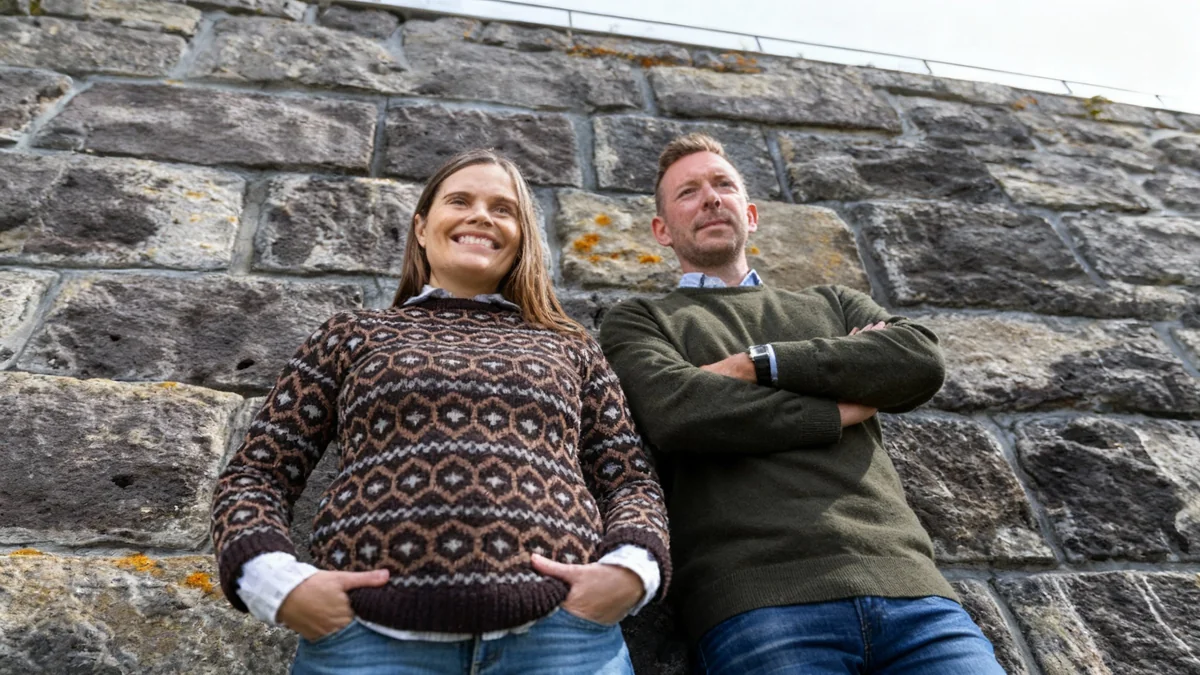


Iceland's former Prime Minister, Katrín Jakobsdóttir, has voiced strong concerns that the Icelandic language could disappear within a single generation. She warns that the rapid rise of artificial intelligence (AI) and the increasing dominance of English-language media are pushing the unique language to the brink. With only about 350,000 speakers, the preservation of Icelandic is a critical national responsibility.
Key Takeaways
- Icelandic language is at risk of disappearing within one generation.
- AI and English media dominance are major contributing factors.
- Only about 350,000 people currently speak Icelandic.
- Former PM Katrín Jakobsdóttir advocates for stronger preservation efforts.
- Iceland is partnering with AI companies to ensure Icelandic language models.
The Silent Erosion of a National Tongue
Katrín Jakobsdóttir, who recently stepped down as prime minister to pursue the presidency, states that Iceland is experiencing a "radical" shift in language use. She observes a growing trend where more people, especially younger generations, are engaging with English content and speaking English more frequently. This trend is particularly evident across social media platforms and other digital channels, where English material is abundant.
The former prime minister expressed her concerns before her appearance at the Iceland Noir crime fiction festival in Reykjavík. She underscored the profound loss that occurs when a language vanishes.
"A lot of languages disappear, and with them dies a lot of value, a lot of human thought," Jakobsdóttir said.
Icelandic stands out as one of the world's least-altered languages, maintaining much of its original structure and vocabulary over centuries. This historical continuity makes its potential loss even more significant.
Did You Know?
Icelandic has remained remarkably similar to Old Norse, the language spoken by Vikings, making it one of the oldest living languages in Europe.
AI's Double-Edged Sword: Threat and Opportunity
The development of artificial intelligence presents both a challenge and a potential solution for the Icelandic language. Jakobsdóttir points out that the way large language models are trained often exacerbates the problem. These models primarily learn from vast datasets of English text, leaving smaller languages like Icelandic underrepresented.
During her time in government, Jakobsdóttir recognized the "threats and dangers of AI" and the importance of ensuring that Icelandic texts and books were included in AI training data. This proactive stance aims to prevent AI from further marginalizing the language.
Working Towards a Solution
Earlier this month, Anthropic, an AI safety and research company, announced a partnership with Iceland's Ministry of Education. This initiative is one of the world's first national AI education pilots. It provides hundreds of teachers across Iceland with access to AI tools, with an implicit goal of integrating Icelandic language use within these emerging technologies.
Co-Author Echoes Concerns
Ragnar Jónasson, a celebrated Icelandic crime novelist and Jakobsdóttir's co-author on two Icelandic noir novels, shares her grave concerns. He believes the language could be lost within a single generation if current trends continue unchecked.
"We are just a generation away from losing this language because of all of these huge changes," Jónasson stated. "They are reading more in English, they are getting their information from the internet, from their phones, and kids in Iceland are even conversing in English sometimes between themselves."
This shift in communication habits among young people is a clear indicator of the pervasive influence of English-language content. The digital landscape offers endless English material, making it difficult for Icelandic to compete for attention.
Lessons from History: A Call for a New Movement
Jakobsdóttir draws parallels to Iceland's history under Danish rule until 1918. During that period, the Icelandic language faced significant Danish influence. She notes that changes can happen "very quickly" under such pressures.
However, she also recalls how a strong national movement by Icelanders rapidly reversed that trend, revitalizing the language. This historical precedent offers hope and a potential roadmap for the current challenge.
"Maybe we need a stronger movement right now to talk about why do we want to preserve the language? That is really the big thing that we should be talking about here in Iceland," she urged.
She emphasizes that the "fate of a nation" can be decided by how it treats its language, as language fundamentally shapes thought and identity. Preserving Icelandic is not just about words; it is about safeguarding a unique way of seeing the world.
Creative Expression Amidst Change
Despite the challenges posed by AI, Jakobsdóttir continues to contribute to Icelandic literature. Her second co-authored crime novel, which recently topped the charts in Iceland, offers a human connection amidst the technological shifts.
The book is set in 1989 in Fáskrúðsfjörður, a remote village in eastern Iceland. For research, the authors spoke with villagers who worked in Icelandic media during the 1980s. This effort ensures authenticity and grounds the story in Icelandic culture and history.
For Jakobsdóttir, reading and writing remain deeply personal and therapeutic. She believes in the power of stories to foster empathy and self-understanding.
"I hope this is something people experience as something authentic and coming from the heart," she said about her new book.
The former prime minister maintains that governments must remain focused on AI development. She believes careful oversight is crucial to manage both the "amazing opportunities" and the "enormous challenges" AI presents, especially for authors and the creative industries.