

A global competition to dominate the future of artificial intelligence is intensifying, with China and the United States adopting fundamentally different strategies. While Chinese cities are injecting hundreds of millions of dollars in state-backed subsidies to fuel local AI development, the U.S. is maintaining a market-driven approach, relying on private capital and innovation to lead the way.
This strategic divergence highlights a core debate over the best way to foster innovation in a technology poised to reshape the global economy. Chinese officials are orchestrating a top-down, state-funded push, while the U.S. bets on its free-market ecosystem to maintain its edge.
Key Takeaways
- China is using massive state subsidies to accelerate its domestic AI industry, with cities like Hangzhou and Shanghai pledging over $140 million each.
- The United States is pursuing a hands-off, market-driven strategy, aiming to create a favorable environment for private companies and capital markets.
- This contrast represents a clash between state-led industrial policy and free-market innovation as the primary driver for technological supremacy.
- Experts suggest China's top-down model, successful in manufacturing, may face challenges in the rapidly evolving and creative field of AI.
China's Unprecedented Spending Spree on AI
Across China, municipal governments are engaged in a fierce competition to become the country's next AI hub, backed by substantial state funding. This coordinated effort is part of a national strategy to achieve global leadership in artificial intelligence.
In the eastern city of Hangzhou, officials have committed $140 million in subsidies to attract and support AI companies. Shanghai quickly matched this figure, launching its own $140 million program and establishing a dedicated "AI innovation town" that offers low-cost office space to startups.
AI Investment by Chinese Cities
- Hangzhou: $140 million in subsidies.
- Shanghai: $140 million in subsidies and an innovation hub.
- Shenzhen: $70 million in annual support for local firms.
- Chengdu: $42 million investment in a single AI startup for a new research facility.
This pattern extends across the country. Shenzhen, a southern tech powerhouse, is already distributing $70 million annually to bolster its local AI ecosystem. In the west, the city of Chengdu invested $42 million directly into a startup named Zhipu AI to build a new model-training center and research facility.
This approach reflects a well-established Chinese playbook: the state acts as a primary financier and protector, aligning government bureaucracy with corporate and entrepreneurial goals to achieve a national mission.
The American Model: A Hands-Off Approach
In stark contrast, the United States government is largely letting the private sector drive AI innovation. The strategy is not to direct or fund specific companies but to create a fertile ground where capital markets and innovative firms can thrive with minimal interference.
This philosophy relies on the dynamism of venture capital, the research and development budgets of established tech giants, and the agility of startups to maintain a competitive edge. The government's role is seen as regulatory and supportive—ensuring a stable economic environment and investing in fundamental research through agencies, rather than picking commercial winners.
Contrasting Economic Philosophies
The U.S.-China AI race is a real-world test of two opposing economic models. China's state capitalism allows for massive, rapid mobilization of resources toward strategic goals. The U.S. free-market system encourages competition and disruptive innovation, believing the best ideas will win out organically.
This approach has historically proven effective for the U.S. in software and internet technologies. The belief is that the unpredictable and creative nature of AI development is better suited to a decentralized, competitive environment than a centralized, state-directed one.
A Clash of Titans: Can State Planning Outpace Market Innovation?
The core question is whether China's top-down, state-funded model can succeed in a field as dynamic as artificial intelligence. While this strategy has delivered remarkable results in manufacturing and infrastructure, AI presents a different kind of challenge.
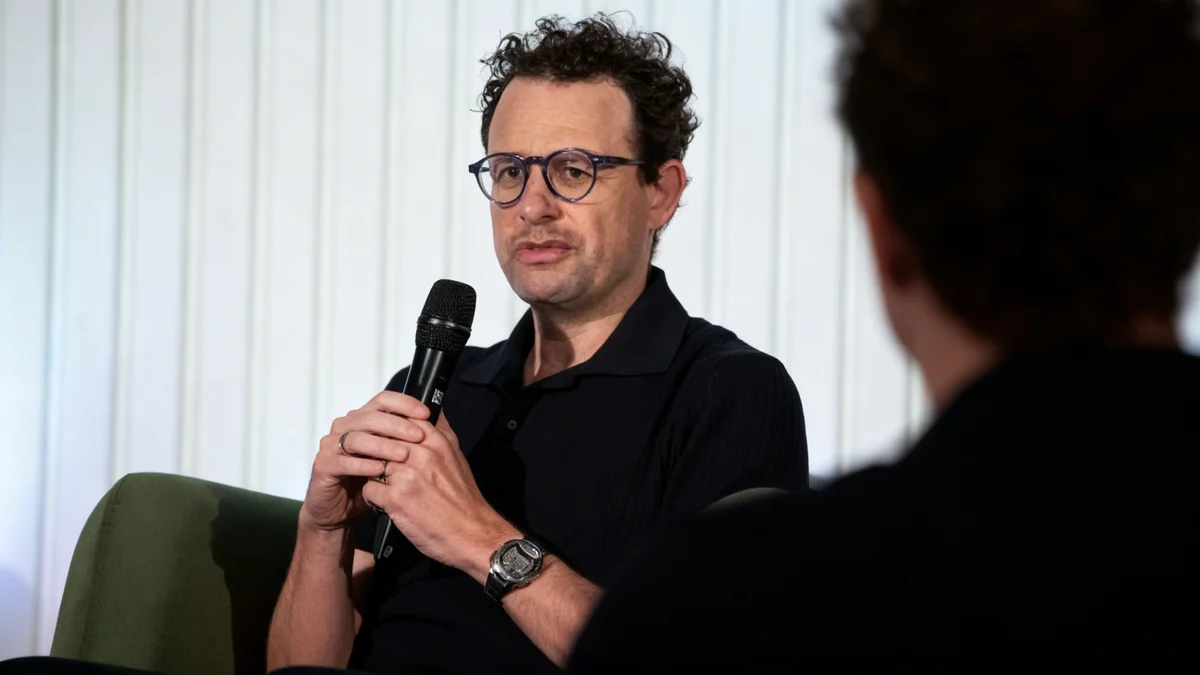
AI development requires constant experimentation, rapid iteration, and a culture that tolerates failure—qualities often associated with nimble startups and competitive markets rather than large, bureaucratic state programs. Paul Triolo, a partner at the advisory firm Albright Stonebridge Group who specializes in Chinese technology, noted the potential friction.
"The Chinese government is struggling to figure out how to support" the AI sector, Triolo stated, highlighting the difficulty of applying old industrial policies to a new technological paradigm. He contrasted this with the U.S. government's effort, which he described as "trying to get out of the way and create an environment in which capital markets and these very innovative companies can run with the ball."
China's approach risks stifling the very creativity it seeks to foster. By directing capital toward state-approved projects, it may overlook disruptive ideas emerging from the grassroots. The U.S. model, however, faces its own risks, including potential market failures and a lack of long-term strategic coherence compared to China's unified national push.
The Stakes in the Global AI Domination Race
The outcome of this competition carries immense geopolitical and economic weight. The nation that leads in AI will likely set global standards and dominate key industries for decades to come, from autonomous transportation and healthcare to finance and national security.
China's massive investment is designed to close the gap with the U.S. and eventually surpass it. The country's leaders in Beijing view AI supremacy as essential to the nation's future economic prosperity and global influence.
For now, two distinct experiments are running in parallel. One is a state-orchestrated mission to build an AI powerhouse through immense public funding. The other is a bet that a dynamic, competitive market, left to its own devices, will ultimately produce the most powerful and transformative innovations. The world is watching to see which path will define the future of technology.