


A strategic shift in artificial intelligence development has positioned China ahead of the United States in global adoption rates, challenging long-held assumptions about technological supremacy. While American firms invest heavily in massive, proprietary AI systems, Chinese companies are championing smaller, open-source models that are proving more adaptable and are being adopted at a faster rate worldwide.
This divergence in strategy is unfolding against a backdrop of a broader technological power shift. Recent analysis from the Australian Strategic Policy Institute (ASPI) reveals that China now leads in 66 out of 74 critical technology fields, including quantum sensors and computer vision, a stark reversal from two decades ago when the U.S. was the undisputed leader.
Key Takeaways
- China leads in 66 of 74 critical technologies, according to a new report from the Australian Strategic Policy Institute.
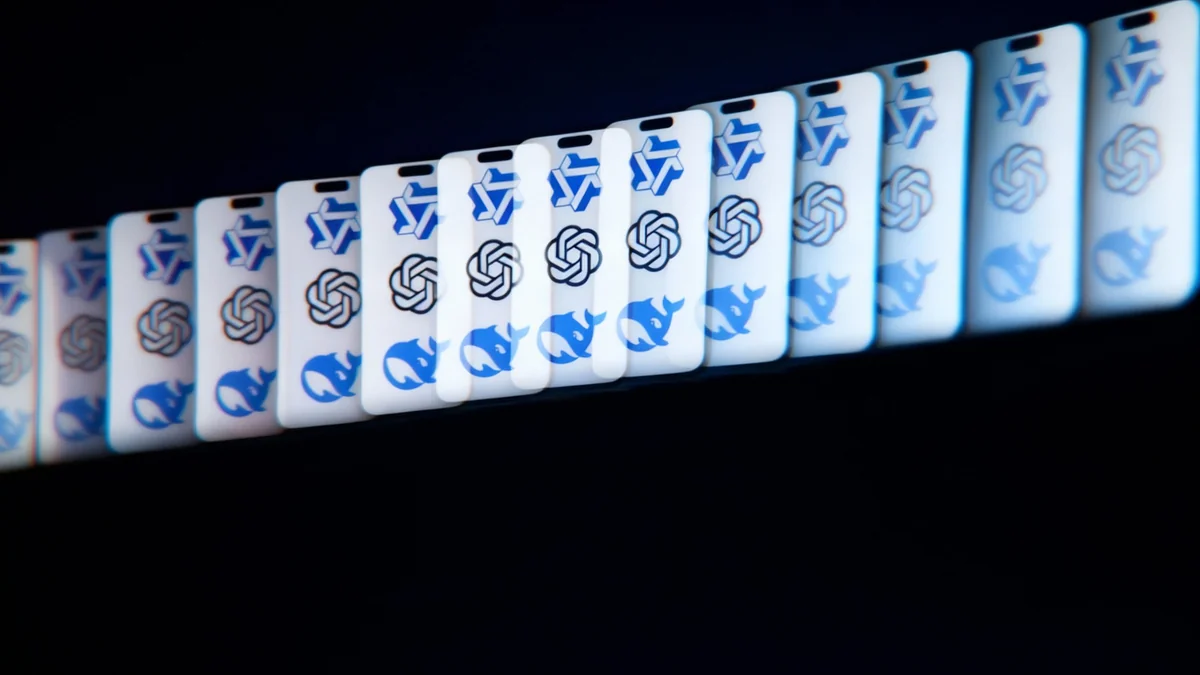
- Chinese open-source AI models like Qwen and DeepSeek are seeing faster global adoption than comparable U.S. models like ChatGPT.
- The U.S. strategy focuses on large, proprietary "closed-weights" models, while China prioritizes smaller, adaptable "open-weights" models.
- China's share of highly cited research papers has grown from 6% in 2005 to 48% today, while the U.S. share has fallen from 43% to 9%.
A Fundamental Shift in Research and Development
The foundation of this technological realignment is a long-term, persistent investment in fundamental research by China. For years, the country has focused on building a comprehensive technology ecosystem while federal science funding in the U.S. has seen cuts in many areas.
The numbers illustrate a dramatic change. In 2005, Chinese institutions accounted for a mere 6% of the world's most highly cited research papers. Today, that figure has surged to 48%. Over the same period, the share of high-impact papers from the U.S. has declined from 43% to just 9%.
From Follower to Leader
According to Nature's latest rankings, nine of the world's top ten research institutions, based on output in leading science journals, are now Chinese. Harvard University is the only non-Chinese institution in the top tier.
This massive output of research does not always guarantee immediate commercial success, but it signals a deep and growing capability. Jenny Wong-Leung, one of the ASPI report's authors, noted that China is focused on "building the whole technology ecosystem," a strategy that is now yielding significant results.
The Great AI Strategy Divide
Nowhere is the strategic difference between the two nations more apparent than in artificial intelligence. Major U.S. tech companies like OpenAI, Google, and Microsoft are pouring hundreds of billions of dollars into creating massive, powerful, and proprietary AI models. OpenAI alone is reportedly planning a $400 billion investment in its data center infrastructure.
These "closed-weights" models, such as ChatGPT and Gemini, are designed to achieve generalizable intelligence but are expensive to train and operate, and their inner workings are not public.
In contrast, Chinese AI firms are pursuing a different path. They are developing smaller, more efficient, and "open-weights" models. Systems like Alibaba's Qwen and DeepSeek are designed to be easily adapted by developers for specific tasks. This approach prioritizes rapid diffusion and practical application over creating a single, all-powerful AI.
Necessity as the Mother of Invention
China's focus on open models is partly a response to U.S. export restrictions that limit its access to the advanced semiconductor chips required to build the largest foundation models. By necessity, Chinese developers have focused on creating powerful AI that can run on less advanced hardware, making it more accessible globally.
This strategy appears to be paying off. A recent study from MIT and Hugging Face found that Chinese open models have already overtaken their U.S. counterparts in global adoption. Even U.S. companies like Airbnb are now using Chinese models like Qwen, citing their speed and cost-effectiveness.
Competing Visions for the Future
The U.S. government and private sector remain committed to leading the world in AI. The recent Genesis Mission initiative aims to provide private companies with access to the vast data sets and computing power of the country's 17 national laboratories. The prevailing American strategy pits its powerful private corporations against the state-directed apparatus of China.
"We’re essentially pitting our private capitalists against this nation state of China. The stakeholders here have two very different sets of resources, attributes, strengths and weaknesses," stated David Lin, a senior adviser to the Special Competitive Studies Project (SCSP).
However, some experts are questioning whether the American focus on giant, closed models is a strategic misstep. Michael Power, a former global strategist at investment firm Ninety One, believes the U.S. is making a "catastrophic strategic error."
"China’s model is turning out to be far more effective in terms of usable compute in the real world," Power explained, highlighting China's lower energy costs as an additional advantage.
Beyond AI: A Broader Technological Contest
While AI is the most visible battleground, the competition extends across numerous high-tech sectors. An assessment by the SCSP provides a snapshot of the current landscape:
- U.S. Leads: Semiconductors, synthetic biology, quantum computing.
- China Leads: Advanced batteries, 5G telecommunications, commercial drones.
This division shows that while the U.S. maintains an edge in some foundational technologies, China has achieved dominance in areas with immediate, widespread commercial and infrastructure applications.
The question that was once unthinkable is now being asked in tech circles from Silicon Valley to Shenzhen: Can the West catch up with China? As Chinese open-source AI models continue to gain traction globally, the answer may depend on whether the U.S. can adapt its strategy to a new and rapidly changing technological reality.