




A global rush to develop human-level artificial intelligence is fueling an investment frenzy reaching into the trillions of dollars. While tech giants and investors bet on a future of unprecedented productivity, financial experts and even AI pioneers are raising concerns about a potential economic bubble with systemic risks for global markets.
The race to achieve Artificial General Intelligence (AGI), a theoretical form of AI with human-like cognitive abilities, is driving staggering levels of spending. However, if this technological leap fails to materialize as quickly as hoped, the fallout could ripple through debt markets and stock exchanges, impacting everything from corporate balance sheets to personal pension funds.
Key Takeaways
- An estimated $2.9 trillion is being invested in AI data centers by 2028, with tech giants like Google, Microsoft, and Amazon leading the charge.
- Financial experts warn that if AI development stalls, it could trigger a financial crash, as trillions in investments are predicated on continued rapid progress.
- The AI boom is financed by a complex mix of corporate cash, private credit, and high-risk debt, increasing the potential for contagion across multiple financial sectors.
- Regulators like the Bank of England and the International Monetary Fund have noted that valuations for AI-linked companies are approaching dot-com bubble levels, posing a risk of a sharp market correction.
The Scale of the AGI Gamble
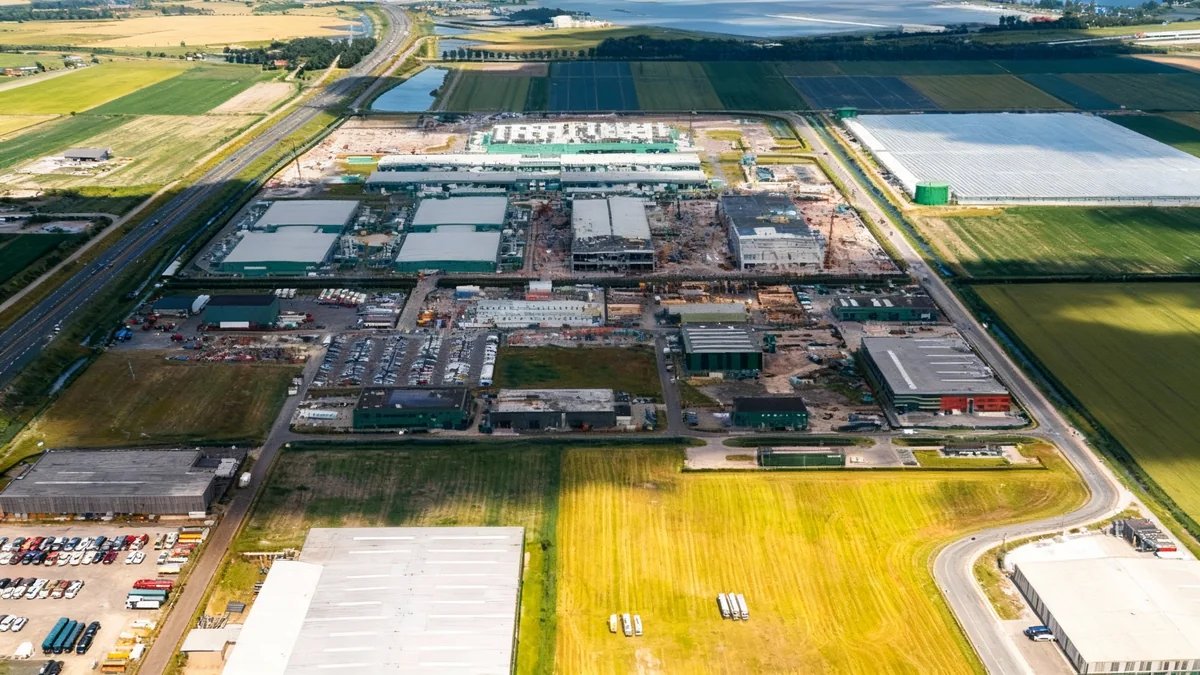
The financial commitment to building the future of AI is immense. Projections show that spending on the data centers needed to power these advanced systems could reach $2.9 trillion by 2028. This infrastructure is the backbone for training and running complex AI models.
The market has responded with soaring valuations for companies at the center of this boom. Chipmaker Nvidia, which produces the specialized processors essential for AI, has seen its market capitalization exceed $4 trillion. Meanwhile, companies like Meta are reportedly offering signing bonuses of up to $100 million to attract top AI engineering talent from rivals like OpenAI.
This massive influx of capital is based on a single, powerful premise: that AGI will be achieved. Investors believe AGI will unlock enormous profits by automating complex white-collar jobs, from accounting to law, creating a new paradigm of economic efficiency.
"Nothing short of AGI will be enough to justify the investments now being proposed for the coming decade," wrote David Cahn, a partner at Sequoia Capital, highlighting the high expectations weighing on the industry.
The Risk of Hitting a Technological Wall
While optimism is high, some of the most respected figures in the field are urging caution. Yoshua Bengio, one of the pioneers of modern AI, has warned that progress is not guaranteed.
"There is a clear possibility that we will hit a wall, that there’s some difficulty that we don’t foresee right now, and we don’t find any solution quickly," Bengio stated. He added that such a scenario "could be a real [financial] crash," as current investments assume a steady pace of advancement.
The 'Taller Ladders' Problem
Some experts question whether the current strategy of simply scaling up existing technology will be enough to achieve AGI. David Bader, director of the Institute for Data Science at the New Jersey Institute of Technology, compared the approach to "trying to reach the moon by building taller ladders." If a fundamentally new breakthrough is required, the trillions spent on current infrastructure could be misallocated.
This sentiment is echoed by others who argue that the current focus on scaling up existing AI architectures, known as transformers, may not lead to true intelligence. If a different approach is needed, the current investment boom could be built on a flawed foundation.
A Complex Web of Financial Risk
The AI infrastructure boom is not just being funded by the deep pockets of tech giants. While companies like Alphabet and Microsoft are covering about half of the data center costs from their cash flow, the rest is being sourced from across the credit markets.
This includes a growing reliance on private credit, a less-regulated corner of the financial world that has already drawn scrutiny from central banks. For example, Meta has borrowed $29 billion from the private credit market to finance a data center. Other financing methods include:
- Investment-Grade Debt: AI-related sectors now account for around 15% of the U.S. investment-grade debt market, a larger share than the banking sector.
- High-Yield Bonds: Riskier "junk debt" is also being used by data center operators to fund rapid expansion.
- Asset-Backed Securities: Debt is being packaged and sold based on future rental payments from tech companies to data center owners.
Market Concentration
The so-called "Magnificent 7" tech stocks—Alphabet, Amazon, Apple, Tesla, Meta, Microsoft, and Nvidia—now account for over a third of the value of the S&P 500 index. This heavy concentration means any downturn in the AI sector could have an outsized impact on the broader stock market.
This diverse financing creates a risk of contagion. According to analysts at JP Morgan, if AGI development falters, the shock could spread simultaneously across investment-grade bonds, high-yield debt, and private credit markets.
Echoes of Bubbles Past
The current frenzy has drawn comparisons to the dot-com bubble of the late 1990s. The Bank of England has warned of "the risk of a sharp correction" due to inflated valuations of AI-linked companies. Similarly, the International Monetary Fund has noted that market valuations are climbing toward levels seen just before the 2000 crash.
Even top tech executives have acknowledged the speculative nature of the moment. Alphabet CEO Sundar Pichai mentioned "elements of irrationality" in the boom, while Amazon founder Jeff Bezos has called it a "kind of industrial bubble."
Despite these warnings, optimists argue that the transformative potential of generative AI justifies the expenditure. They believe the technology will reshape entire industries, from advertising and search to software development, creating more than enough value to validate the trillions being invested. For now, the world watches as the high-stakes bet on artificial intelligence unfolds, with the global economy hanging in the balance.