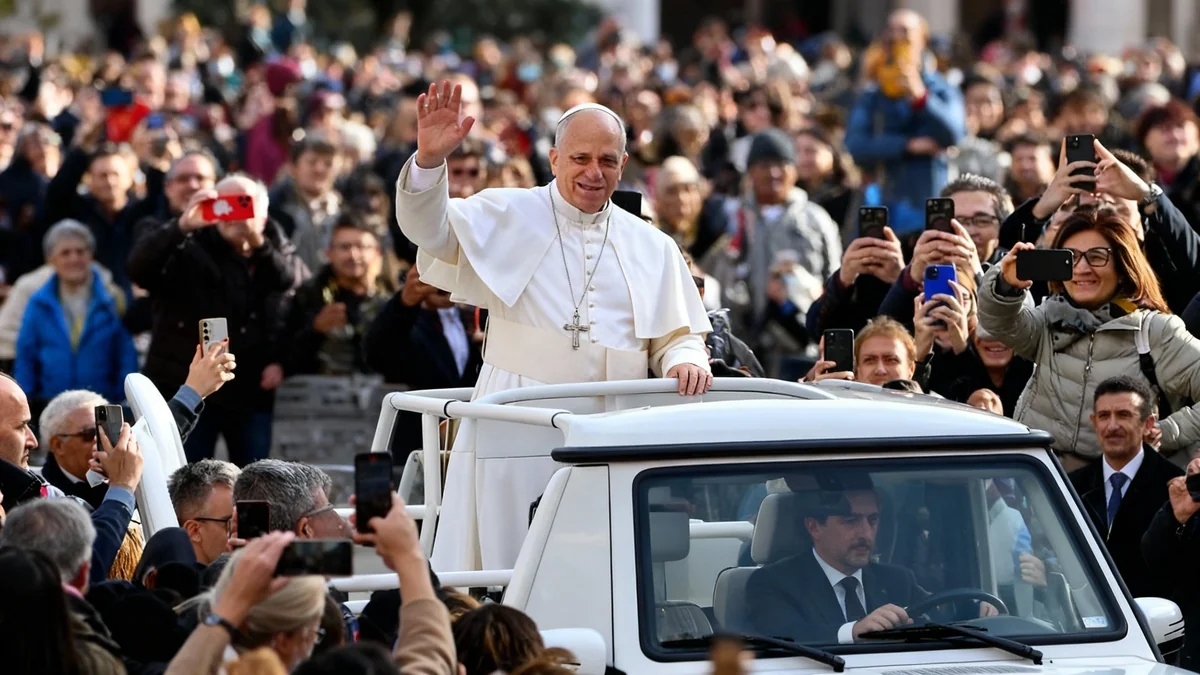





Pope Leo XIV has issued a significant warning regarding the growing trend of emotionally sophisticated artificial intelligence, urging global leaders to implement regulations that protect individuals from forming potentially harmful bonds with AI chatbots. The message, released ahead of the World Day of Social Communications, highlights concerns that these technologies could dilute human creativity and manipulate emotional states.
The pontiff emphasized the increasing difficulty in distinguishing between interactions with humans and AI, cautioning that chatbots designed to be overly “affectionate” can become hidden influences in people's private lives.
Key Takeaways
- Pope Leo XIV expressed concern that “overly affectionate” AI chatbots pose a risk to human emotional well-being.
- He called for international and national regulations to manage the development and deployment of AI.
- The Pope stressed the need to protect human creativity and decision-making from being diluted by artificial intelligence.
- He highlighted the danger of a small number of companies controlling powerful AI systems that can shape human behavior.
A Call for Regulation and Human Protection
In a formal message addressing technological innovation, Pope Leo XIV voiced strong concerns about the psychological impact of advanced AI. He warned that chatbots engineered for constant availability and affection could evolve into what he termed “hidden architects of our emotional states.”
This capability, he argued, allows AI to “invade and occupy people’s intimate spheres” in unprecedented ways. The Pope’s statement is a direct call to action for governments and international bodies to establish clear rules.
“Appropriate regulation can protect people from an emotional attachment to chatbots and contain the spread of false, manipulative or misleading content,” the Pope wrote.
The message underscores a belief that without proper oversight, the lines between genuine human connection and simulated companionship could blur, leading to unforeseen social and personal consequences.
A Papacy Focused on Technology
Unlike many of his predecessors, the US-born Pope Leo XIV has shown a keen engagement with the digital world. Known to wear a smartwatch and having maintained a presence on social media platforms like X before his papacy, he has made the ethical development of AI a central theme of his leadership. His proactive stance reflects a growing global dialogue on the societal role of advanced technology.
Distinguishing Human from Machine
A core part of the Pope's message focused on the integrity of information and the importance of authorship. As AI-generated content becomes more sophisticated, he noted the challenge of discerning whether online interactions are with people, bots, or virtual influencers.
He specifically called for measures that would clearly label AI-generated content, protecting the work of journalists, artists, and other creators.
“Authorship and sovereign ownership of the work of journalists and other content creators must be protected,” he stated, framing information as a fundamental “public good.”
This concern extends to the media industry, with the Pope cautioning companies against deploying algorithms solely “for a few more seconds of attention” if doing so compromises professional and ethical values.
Personal Connection to the Issue
The Pope's focus on this issue is informed by real-world events. In late 2025, he met with Megan Garcia, the mother of 14-year-old Sewell Setzer, who took his own life after extensive conversations with an AI chatbot. This meeting appears to have reinforced the Pope's conviction that the potential for emotional harm is not theoretical but an immediate and pressing danger.
The Concentration of Power
Pope Leo XIV also directed attention toward the small number of corporations driving the development of artificial intelligence. He pointedly referenced the founders of major AI companies who were recently recognized as “Person of the Year 2025” by Time magazine, suggesting this concentration of influence is a serious concern.
He warned that allowing a “handful of companies” to have such significant control could have profound implications. According to the pontiff, these algorithmic systems can “subtly shape behavior and even rewrite human history – including the history of the Church – often without us fully realizing it.”
This concentration of power, he implied, risks creating systems that serve narrow corporate interests rather than the common good, further underscoring the need for public and governmental oversight in the AI sector.
Protecting Human Dignity in a New Era
The Pope’s message is timed for the Catholic Church’s 59th World Day of Social Communications, which will be observed on May 17, 2026. The theme for this year is the protection of human dignity amidst rapid technological change.
His writing serves as a framework for this global discussion, positioning the debate over AI not just as a technological or economic issue, but as a fundamentally human one. The core of his argument is that innovation must not come at the cost of human autonomy, creativity, and the capacity for genuine interpersonal connection.
By urging for a global ethical framework, Pope Leo XIV is positioning the Church as a key voice in one of the most defining conversations of the 21st century, advocating for a future where technology serves humanity, not the other way around.