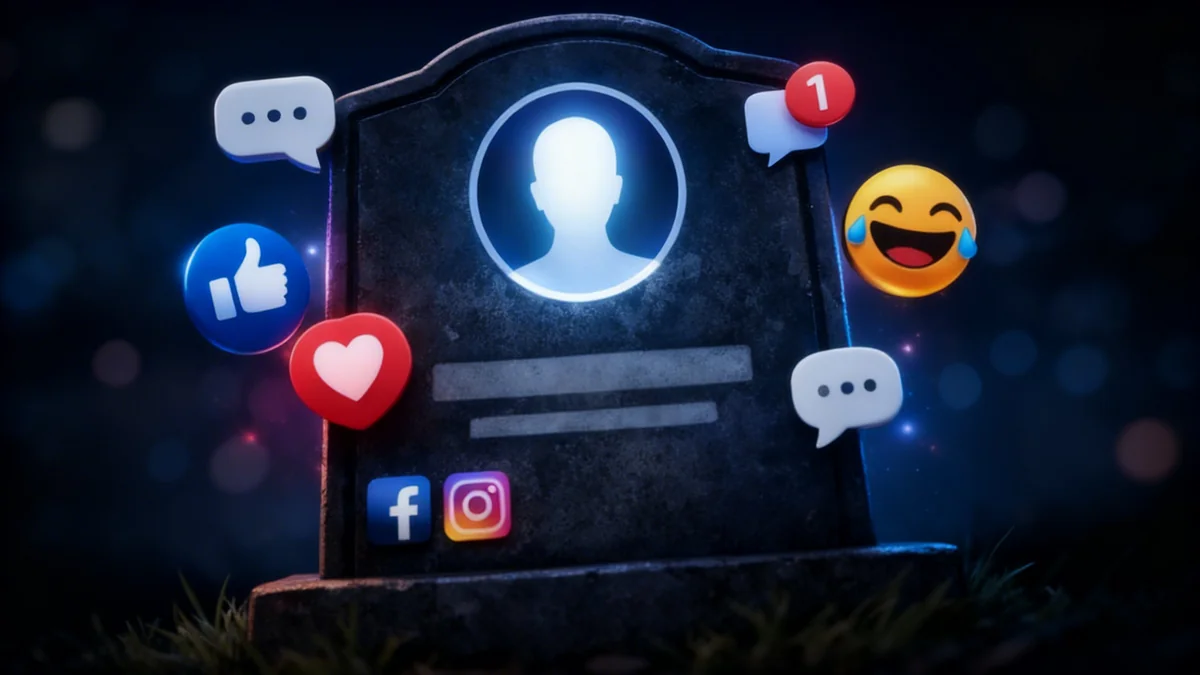




Meta has secured a patent for an artificial intelligence system designed to mimic a person's online persona, potentially allowing their social media accounts to remain active even after they have passed away. The technology would analyze a user's entire digital history to create a virtual replica capable of posting updates, sending messages, and interacting with others.
While the company states it has no current plans to develop the feature, the patent filing raises significant questions about digital identity, consent, and how society manages grief in the age of AI.
Key Takeaways
- Meta was recently granted a patent for an AI that can simulate a user's social media activity.
- The system would use a person's past posts, messages, and interactions to train a large language model.
- The technology could be used for absent or deceased users, with the patent noting the permanent implications of death.
- A Meta spokesperson confirmed there are no immediate plans to build this feature, describing the patent as conceptual.
- The concept aligns with previous statements from CEO Mark Zuckerberg about AI's potential role in preserving memories, contingent on user consent.
A Digital Ghost in the Machine
The patent, originally filed in 2023, describes a sophisticated system for creating a digital doppelgänger. By feeding a large language model with a user's data—including every post, comment, private message, voice note, and 'like'—the AI could learn to replicate their unique communication style, opinions, and personality.
This digital persona could then operate the account autonomously. According to the patent's text, the model could be used for “simulating the user when the user is absent from the social networking system.” This includes temporary absences, but the document specifically highlights the more profound scenario where a user is deceased.
The filing acknowledges that the inability for a deceased user to return is a “much more severe and permanent” situation. The system would, in effect, allow a digital version of the person to continue their online existence, interacting with friends and family who are still living.
Beyond Text-Based Interaction
The patented technology is not limited to text. The filing outlines possibilities for the AI to simulate a person's voice for audio calls or even generate video, creating a fully interactive digital replica of the deceased individual.
Company Position vs. Technological Possibility
Despite the detailed nature of the patent, Meta has moved to manage expectations. A company spokesperson clarified that many patents are filed to protect ideas that never materialize into actual products. “We have no plans to move forward with this example,” the spokesperson stated, emphasizing the conceptual nature of the filing.
However, the idea is not new within Meta's strategic thinking. In a 2023 interview, CEO Mark Zuckerberg discussed the future of AI and memory. He suggested that technology could eventually offer ways for people to interact with AI versions of their loved ones.
“There may be ways for these AI systems to help you interact with a representation of a loved one,” Zuckerberg said, adding that the company will eventually “have the capacity” to create such replicas.
During that discussion, he stressed the importance of user control over their digital legacy. “It should ultimately be your call,” he noted, indicating that explicit consent from the individual before their death would be a critical requirement for any such system.
The Broader Ethical Landscape
Meta is not the first company to explore the concept of digital immortality. Several smaller startups have already launched services that allow users to create interactive avatars of deceased relatives, sparking both fascination and controversy. These technologies often draw comparisons to speculative fiction, particularly episodes of the series Black Mirror, which have explored the emotional and psychological consequences of such innovations.
Consent and Digital Legacy
The emergence of AI-powered digital replicas forces a new conversation about digital estate planning. Key questions include:
- Who owns a person's digital persona after their death?
- Can consent be given for an AI to act on your behalf indefinitely?
- What are the psychological impacts on grieving friends and family who interact with a digital ghost?
- How can such systems be protected from misuse or manipulation?
Critics and ethicists worry about the potential for emotional distress, manipulation, and the blurring of lines between genuine memory and artificial simulation. The ability for an AI to continue a person's social media presence could complicate the grieving process for loved ones, creating a persistent digital echo that prevents closure.
While Meta insists this particular patent is not on its product roadmap, its existence confirms that major technology companies are actively researching and securing intellectual property around the concept of AI-driven digital personas. As AI capabilities continue to advance, the debate over how to ethically manage our digital afterlives is set to become increasingly urgent.