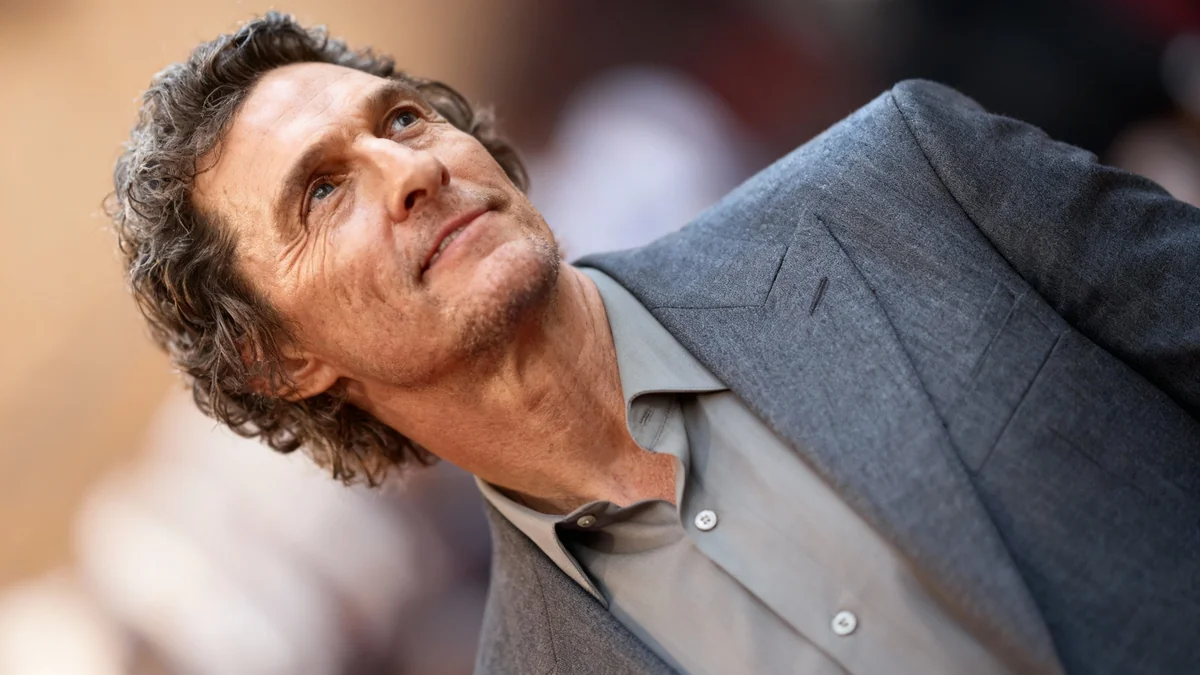
In a pioneering move for the entertainment industry, actor Matthew McConaughey has successfully trademarked his voice and likeness to protect them from unauthorized use by artificial intelligence. The legal registration, filed with the United States Patent and Trademark Office, includes his iconic catchphrase, “alright, alright, alright,” signaling a new strategy for celebrities navigating the rise of generative AI.
This action represents the first known instance of an actor using trademark law as a shield against potential AI-driven deepfakes and digital impersonations. While his legal team notes no specific instances of misuse have occurred yet, the trademarks are intended to establish a clear legal boundary for the use of his identity.
Key Takeaways
- Matthew McConaughey has trademarked his voice, image, and famous catchphrases to prevent unauthorized AI use.
- Legal experts believe this is the first time an actor has used trademark law for this specific purpose.
- The move is a proactive measure to establish consent and control over his digital likeness.
- McConaughey is not opposed to AI technology, having invested in the AI voice company ElevenLabs.
A New Legal Frontier for Hollywood
The decision to pursue trademark protection is a direct response to the growing capabilities of AI to replicate human voices and appearances with stunning accuracy. McConaughey’s legal team has registered several audio clips, including his well-known line from the 1993 film Dazed and Confused.
By doing so, they aim to create a legal framework that requires explicit permission for any use of his digital persona. This strategy shifts the conversation from reacting to misuse to proactively defining ownership from the outset.
“My team and I want to know that when my voice or likeness is ever used, it's because I approved and signed off on it,” McConaughey stated in an email. “We want to create a clear perimeter around ownership with consent and attribution the norm in an AI world.”
The trademarks were registered by the commercial arm of the Just Keep Livin Foundation, the non-profit organization founded by the actor and his wife, Camila Alves McConaughey.
Protecting Reputation and Licensing
The rise of deepfake technology has become a significant concern for public figures, posing risks to both their reputation and potential income. Unauthorized AI-generated content can lead to the spread of misinformation or create endorsements for products the celebrity has not approved.
The Growing Threat of AI Deepfakes
The entertainment industry is increasingly grappling with AI misuse. In early 2024, actress Scarlett Johansson raised concerns about an OpenAI chatbot voice that was “eerily similar” to her own. Previously, explicit AI-generated images of singer Taylor Swift circulated online, prompting calls for stronger regulations. These high-profile incidents highlight the urgent need for new legal and ethical guidelines.
Alina Trapova, an assistant professor in copyright law at University College London, noted that this is a novel application of trademark law for an actor. She explained that for celebrities, the issue is twofold: preventing reputational damage and avoiding missed licensing opportunities.
“Unauthorized commercialisation of their likeness in the forms of deepfakes becomes more and more challenging in the age of AI,” Trapova commented, adding that public figures are now experimenting with various legal tools for protection.
A Nuanced Approach to Technology
Despite this defensive legal maneuver, McConaughey is not entirely opposed to artificial intelligence. He has reportedly held a stake in ElevenLabs, a software company that specializes in AI voice modeling, for several years. The company has even created an official, authorized AI audio version of the actor's voice.
McConaughey's involvement with ElevenLabs shows a calculated approach. Rather than rejecting AI, he is engaging with it on his own terms, ensuring that any digital replication of his voice is done with his consent and involvement. This suggests a future where celebrities may license authorized AI versions of themselves for specific projects.
This dual approach—protecting against unauthorized use while investing in authorized applications—highlights a potential path forward for others in the creative industries. Kevin Yorn, one of the lawyers representing McConaughey, mentioned that a secondary goal of the trademarks is to “capture some of the value that is being created with this new technology.”
Will Other Celebrities Follow Suit?
McConaughey’s action could set a precedent for how artists, actors, and musicians protect their intellectual property in the digital age. As AI tools become more accessible, the ability to create convincing deepfakes is no longer limited to sophisticated tech companies.
Dr. Sandra Wachter, a professor of technology and regulation at the University of Oxford, anticipates that more creatives will adopt similar strategies.
“It is simple for companies to take your work and train a model to do your job. It is comparatively difficult for you to protect your work in the first place,” she told the BBC.
The move comes as major Hollywood studios like Disney and Universal have also taken legal action, suing AI firm Midjourney over allegations that its image generator engages in plagiarism. As the lines between human and machine-generated content continue to blur, the fight to define and protect digital identity is only just beginning.